Across Africa, young innovators are harnessing digital technologies to address persistent health challenges, from diagnostics and telemedicine to logistics and community health.
However, one question continues to shape these conversations: ‘How do promising youth-led ideas move from pilots and presentations into the systems where they can be tested, trusted, adopted, and sustained?’
This was one of the key issues discussed during the 2026 Insights Learning Forum (ILF) session: “Youth at the Centre: Creating Digital Solutions that Leave No One Behind.” The session reiterated that young people should not be seen only as beneficiaries of Africa’s digital health transformation. They should be recognised as leaders, co-creators, and partners in building stronger health systems.
ILF 2026 brought to the fore the barriers that often prevent youth-led innovations from progressing beyond early visibility. Some of the challenges include: unclear government engagement pathways, bureaucracy, limited access to financing and decision-makers, limited exposure to how health systems operate, and few opportunities to test solutions in real implementation environments.
The issue is no longer whether young innovators deserve a place in the conversation. The issue is whether the health ecosystem can create clear pathways for their ideas to be tested, supported, adopted, and sustained.
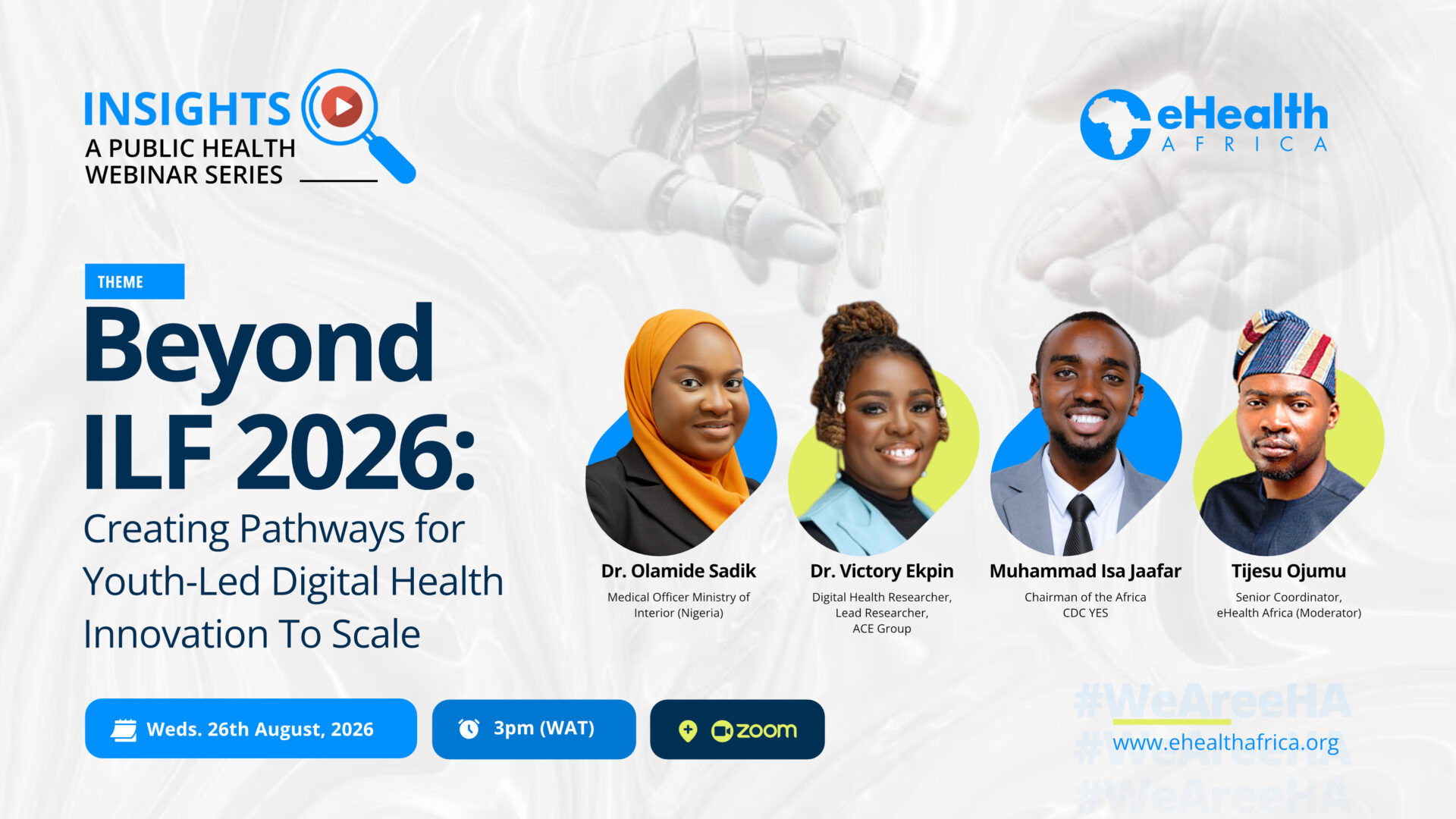
In this vein, the 43rd edition of eHealth Africa’s Public Health Dialogue Series, themed “Beyond ILF 2026: Creating Pathways for Youth-Led Digital Health Innovation,” will build on this conversation by asking what those pathways should look like in practice.
For Muhammad Isa Jaafar, Chairman of the Youth Engagement Strategy (YES) of the Africa Centres for Disease Control and Prevention and webinar speaker, the answer begins with three actions: mobilise, empower, and support young innovators. That means bringing them closer to policy spaces, equipping them with skills and regulatory knowledge, and building systems that can fund, promote, and protect their innovations. He added that meaningful youth engagement also requires architecture, dedicated human and financial resources, including predictable budgets.
Part of the answer lies in early engagement. Young people need to be involved from the point where problems are being defined, not only when a solution is ready to be showcased. When innovators understand health-system priorities, community realities, and regulatory expectations, they are better positioned to build solutions that respond to actual needs.
For Dr. Olamide Sadik, a Medical Officer with Nigeria’s Ministry of Interior, this question is not theoretical. Her perspective is shaped by the realities young researchers and innovators face within formal systems, including unclear approval processes, bureaucracy, and the challenge of earning institutional trust. As one of the speakers for the webinar, she described meaningful integration as “continuous engagement, not one-off consultation forums.”
Another pathway is access to existing infrastructure. Too often, young innovators are expected to build from ground zero, even when systems, platforms, data structures, and implementation channels already exist. Youth-led innovation must plug into what already exists, rather than work in isolation.
Pathways also require credibility and trust. Dr. Olamide noted that institutions can help move young innovators from “risky bets” to “system-ready partners.”
As Dr. Olamide noted, one clear sign of progress would be seeing at least one youth-led solution move from pilot to government-backed adoption within a health system: “a named solution, in a named system, with real buy-in,” rather than another promising pilot that stalls after funding ends. Muhammad makes a similar point: young people must be trusted as important stakeholders whose lived experience can help shape relevant solutions.
That shift will require transparent approval processes, clear regulatory guidance, protections against exploitation, mentors who can open doors, and financing models that consider what happens after grants or pilots end. The upcoming Insights Webinar will move the conversation forward by focusing on the pathways that can make youth leadership possible.
Join the 43rd edition of eHealth Africa’s Public Health Dialogue Series as we continue the conversation on “Beyond ILF 2026: Creating Pathways for Youth-Led Digital Health Innovation.”