How eHealth Africa Is Empowering Women Entrepreneurs to Drive Community Impact

Moshood Isah 

Generally, venturing into any kind of business comes with huge risks and the fear of the unknown regarding its potential success or failure. It becomes even more difficult when a woman is setting up a business in a competitive and mostly male-dominated environment.

Women largely depend on their savings, as the United Nations recently revealed that only about 23% of women-owned businesses in Nigeria can access formal credit, while nearly 80% rely on personal savings to start and sustain their ventures.

This is the biggest fear of Grace Mark, a female business owner in Northeastern Nigeria. “When I started my business, my biggest fear was that I was investing in something that might not succeed because I lacked connections and financial support,” she said. “I was worried because I didn’t know anyone who could support my small business. I began reaching out to different organizations, and eHealth Africa was one of them. At the time, I believed that if you didn’t know someone within an organization, your company wouldn’t even be considered.” The story of Grace changed for the better after her first encounter with eHealth Africa.

Recognizing that women are often among the most underserved groups in many communities, both in Africa and globally, the Board and Management of the EHA Group the parent platform for eHealth Africa, EHA Clinic, and eHA Impact Ventures took deliberate steps to empower women by encouraging and supporting female business owners and vendors.

According to eHealth Africa’s Director of Finance and Administration, Dr. Ben Igbinosa, the organization took intentional steps to create opportunities within its procurement processes to encourage women to participate and succeed in doing business with the organization. He said, “This is in line with the Group’s broader vision of ensuring underserved communities live healthy and prosperous lives.

As revealed by Dr. Ben, before this initiative, less than 20 percent of eHealth Africa’s vendors were women. To address this imbalance, the organization set a target that 30 percent of procurement opportunities within the single-quotation threshold should go to women. Aside from prioritizing women-owned businesses, one of the strategies eHealth Africa deployed was organizing training sessions to help women understand how to do business with the organization, which follows international standards. “Once vendors understand how to work with us, they can easily work with other organizations in the development sector as well,” Dr. Ben added.

The training bridges critical gaps in how business is conducted and, by extension, opens up bigger opportunities. Many women in local communities operate informal businesses. They engage in small-scale trading without registering their businesses or meeting formal requirements.

However, Dr. Ben said, “To work with organizations like eHealth Africa, vendors must meet certain legal and operational standards. For example, businesses must be registered with the Corporate Affairs Commission (CAC) and must have a Tax Identification Number (TIN). These requirements ensure that vendors operate legitimate businesses.”

Beyond registration, we also trained them on procurement processes, how to respond to a Request for Quotation (RFQ), how quotations are evaluated, and what organizations look for when selecting vendors.” These include competitive pricing, product quality, and the ability to deliver on time.

The idea is simple: if they meet these standards, they can continue to receive business opportunities, grow their enterprises, and become economically empowered. Importantly, this has been the case with vendors like Grace Mark, who secured her business opportunity with eHealth Africa by taking basic steps.

One key lesson Grace learned from the training is transparency and fairness. “Vendors are given equal opportunities to quote, regardless of whether they know anyone in the organization,” she said.

In fact, eHealth Africa was the first organization I supplied to after starting my business. I had assumed that connections were necessary to secure contracts, but my encounter with eHealth Africa changed that perspective completely,” Grace added.

Another businesswoman, Ngozi, corroborated this, saying, “During the training conducted by eHealth Africa, they explained that they aim to empower women and even give slight preference when awarding contracts if quotations are similar.” Ngozi revealed that the training has made it easier and more effective to deal with other clients. “For example, when working with other clients, I insist on having a Purchase Order (PO) before proceeding. It helps me make the best moves at the right time and manage other clients effectively,” she said.

The impact is indeed immense, as women continue to become economically and intellectually empowered. Dr. Ben also revealed that one of the many women who participated in the program “eventually secured a contract worth about ₦22 million with us. She successfully delivered the contract and later secured another contract worth about ₦52 million.”

The intention is not to exclude men but to deliberately create opportunities for women who have historically been underrepresented. The goal is to gradually build capacity and ensure women can confidently compete in the broader procurement space. When women are economically empowered, they support their families, educate their children, and contribute to the stability of their communities. This is because economic empowerment reduces poverty, improves household welfare, and can even help reduce social problems such as crime or exploitation.

Frontline Workers Confront Polio Threats With Quiet Sacrifice and Digital Tools 

Moshood Isah 

For frontline vaccinators, reaching every child often means trekking long distances across difficult terrain and in harsh weather conditions.

 Vaccination campaigns in the remotest of communities are definitely a herculean task. Doing so during Ramadan or the Lenten fasting period, under harsh weather conditions, is a very important and necessary sacrifice aimed at confronting polio threats and protecting children through life-saving vaccines.

The life-saving impact and the importance of saving children across communities indeed trounces any difficulty or hardship experienced during the process”. This is the general response of vaccinators and supervisors during the just concluded vaccination campaign in Kebbi and neighboring Sokoto and Zamfara states. 

eHealth Africa’s Kebbi state coordinator, Habib Salako, despite spiritual obligations of the fasting season, effectively plans, implements, and monitors vaccination campaigns, which remain a crucial obligation. “My responsibility as State Coordinator is to coordinate the activities of public health programs, including deployment of Geospatial Tracking Systems and Advocacy Communication and Social Mobilization (ACSM).” he said. Habib also leads the development of digital micro-plans, printing and distribution of guide maps, and supports the state in Routine Immunization services and any other public health service delivery components.

For Habib, leading vaccination campaigns in his state is a service to humanity. He said, “The joy of seeing children vaccinated is immense because when a child is vaccinated, we boost their immune system and help prevent future diseases. That is the biggest reward and motivation to continue despite stress.”

Beyond vaccination, Habib and his team of Local Government Area Coordinators engage in social mobilization and awareness campaigns, working with traditional and religious leaders, schools, parent-teacher associations, youth groups, women’s groups, Community-Based Organizations, and other stakeholders. The goal, according to him, is to ensure quality healthcare delivery, even in the most remote and, many times, in security-compromised locations. 

The case is the same with Rabiu Sani, who supports public health campaigns in Birnin Kebbi Local Government as the coordinator of his LGA. Despite working in difficult and sometimes security-compromised terrain, Rabiu also endured the challenge of convincing non-compliant caregivers to accept vaccines for their children.

Despite these challenges, we do our best to ensure that eligible children are immunized,”, he said. Rabiu showered encomiums on all vaccinators going house to house to administer life-saving vaccines to protect children, saying no monetary compensation can match the effort they put in. “I ask them to continue; their reward will come from God”, he added.

The Ramadan/Lent Vaccination campaign was necessitated by the recent discovery of  Circulating Variant Poliovirus type 3 (cVPV3) in Aliero Local Government of Kebbi state. The state is highly vulnerable due to its multiple borders, across LGAs, state boundaries, and international borders, which allow people to move in and out freely. This is why Kebbi State, in particular, continues to experience these variants.

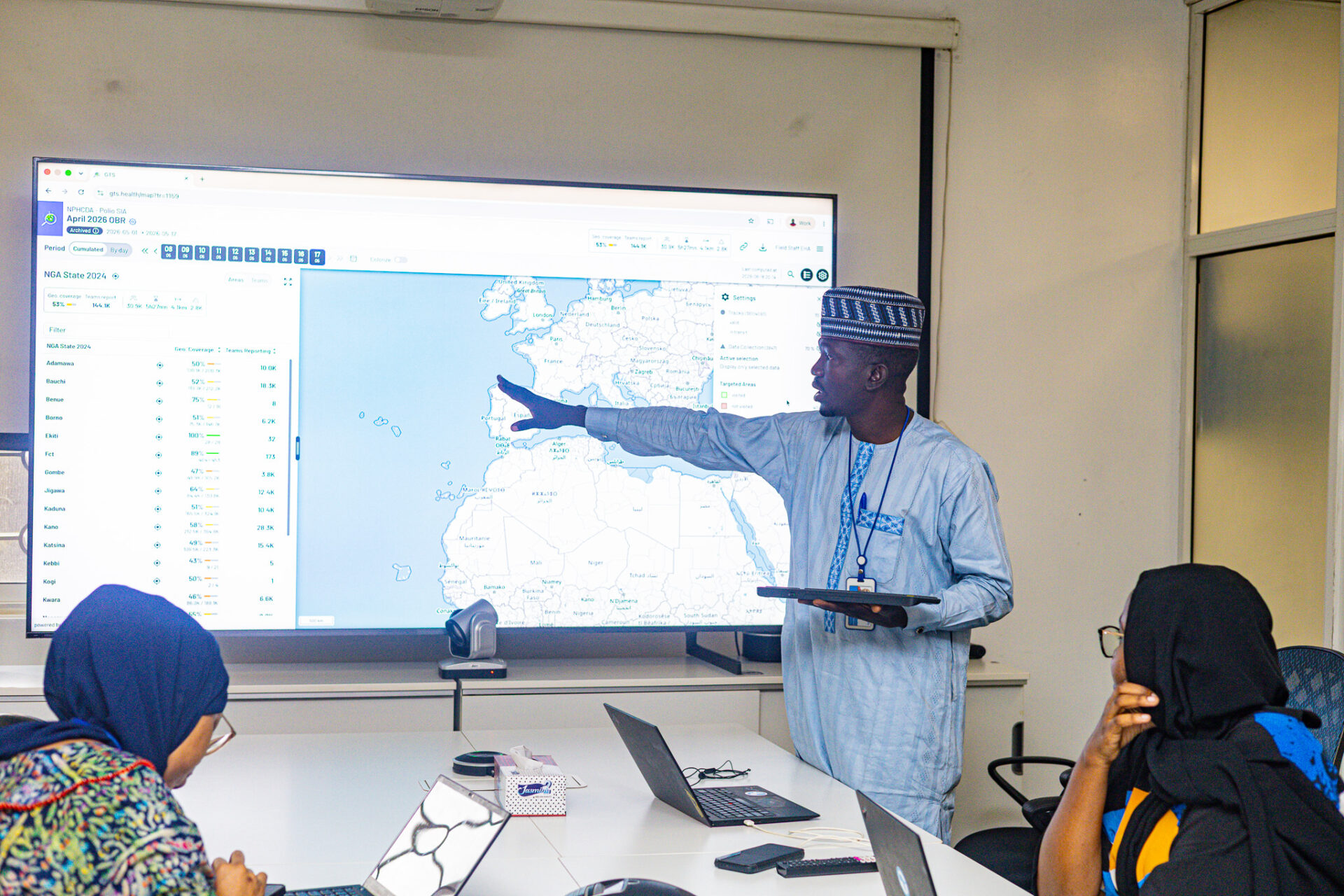
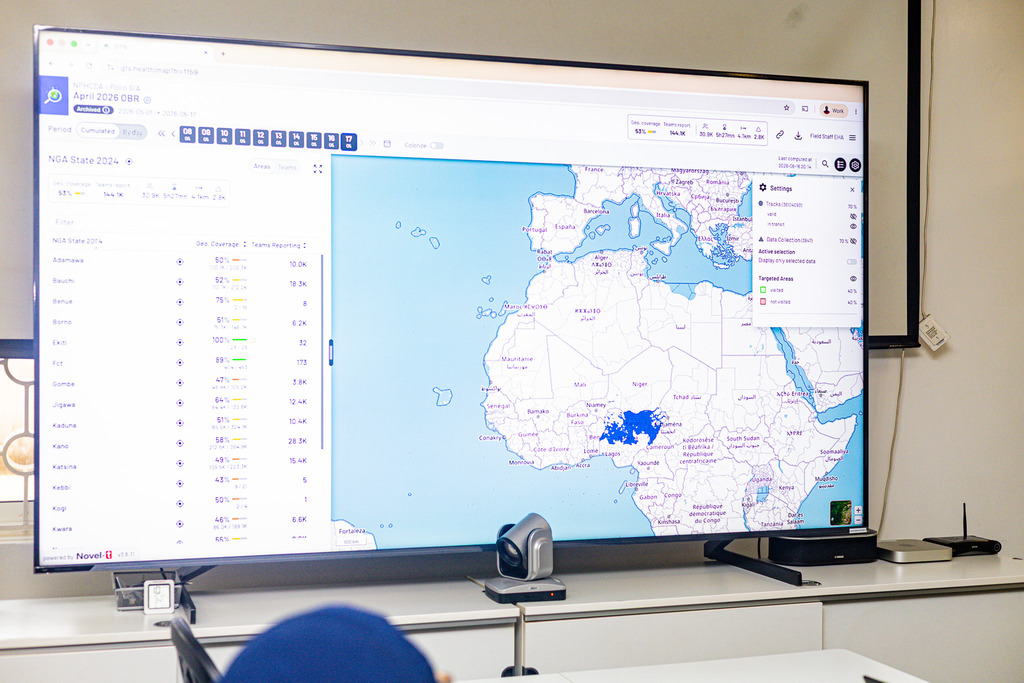
For this reason, both the state and the country, through the polio program, intentionally selected this period to conduct the campaign at this time. The campaign was implemented across three states: Kebbi, Sokoto, and Zamfara. To ensure the vaccination campaign process is seamless, data-driven, and efficient, eHealth Africa has successfully led the transition from paper-based micro-planning to digitised platforms using PlanFeld, eHealth Africa’s in-house digital solution.

According to the project manager, Comfort Audu, PlanFeld depends largely on Geographic Information System-enabled data, which is the master list of settlements containing several attributes. She said, “eHealth Africa ensures data from across all settlements are clean and accurate via proper validation”.  “Once the data is ready, we generate a micro-plan, daily implementation plans, ward guide maps, and maps for teams to implement immunisation campaigns across the states”, she added.

While a micro-plan is basically a practical guide that directs vaccination team members on where to go and what to do during campaigns,  the Daily Implementation Plan (DIP) serves as a day-to-day roadmap. “It helps teams decide their movements based on settlement characteristics, the number of working days, and the specific areas to be covered”, she said 

Thus, during the difficult period of the vaccination campaign during fasting, proper vaccination planning, enhanced by Planfeld, rationalizes workload for teams. It also accounts for the logistics required to successfully carry out each day’s activities.

The general outcome of all this support is to ensure that the virus is curbed and that eligible children are reached, even in the last mile. This means vaccinating children in their households or at borders, including those found on the streets across Nigeria and neighboring countries, as border vaccinations are also being conducted.

Through these coordinated efforts, eHealth Africa continues to demonstrate leadership in the vaccination space, leveraging data-driven strategies, strong partnerships, and on-the-ground expertise to reach underserved populations and strengthen disease surveillance. This commitment not only supports the fight against polio but also reinforces resilient health systems capable of protecting every child, everywhere.

On the Frontlines in Jigawa State: Strengthening the Fight to Protect Every Child

Abubakar Abdulkareem

Despite significant progress in Nigeria’s polio eradication efforts, persistent gaps in immunization coverage continue to enable the circulation of variant poliovirus (cVPV). Evidence from campaign evaluations and Lot Quality Assurance Sampling (LQAS) shows that a proportion of Local Government Areas still fail to meet required coverage thresholds, with missed households, absent children, and non-compliance identified as key drivers of low performance.

These operational and data-related gaps, combined with challenges reaching mobile and hard-to-access populations, continue to leave pockets of unvaccinated children, particularly in high-risk northern states. However, in March 2026, a quiet but powerful shift began in Jigawa State.

Across communities, a new group of dedicated eHealth Africa field consultants deployed by the Disease Prevention, and Monitoring Team under the Geo-Tracking System (GTS) Project took their positions. Their mission is simple, yet urgent: to ensure that no child is missed in the ongoing fight against the circulating variant poliovirus (cVPV). This deployment comes at a critical moment. While progress has been made, the virus continues to find gaps, missed households, hard-to-reach settlements, and underserved communities. Closing these gaps requires more than plans; it requires presence, consistency, and trust on the ground.

The deployment and strategic positioning of the eHA field team,Local Government Consultants, represents a deliberate step toward strengthening public health interventions across all thematic areas in Jigawa states, positioning eHA as strategic partner. By ensuring their continuous presence within communities, this approach reinforces real-time support, deeper engagement, and sustained impact at the last mile for the last child. Before stepping into the field, the consultants gathered for an intensive orientation from 25th to 26th March 2026. Over two days, they didn’t just learn systems, they aligned around purpose. Through hands-on sessions on GTS tracking, microplan digitization (eHA Planfled), MLOS validation, and tools like Vaccine Buddy, they built the skills needed to translate strategy into action.

But beyond the tools, the conversations were grounded in real challenges from the field. Insights from recent national training highlighted persistent issues including teams unfamiliar with assigned areas, missed settlements, gaps in supervision, and inconsistencies in data reporting. These are not just technical gaps; they are the spaces where children are left unreached.Now, with a permanent presence in Jigawa, these consultants are helping to change that story.

Day by day, the eHA local government consultants will walk alongside vaccination teams, supporting microplan implementation, strengthening accountability, and ensuring that data reflects reality. They will help teams see what was previously missed, connect fragmented efforts, and respond quickly when gaps appear. Their work brings visibility to the last mile for the last child, where success is defined by every child reached.

This is what change looks like: not a single moment, but a series of deliberate actions, showing up, paying attention, and improving continuously.

 Through this deployment, eHealth Africa is reinforcing a simple belief: that strong systems, when combined with committed people on the ground, can transform outcomes. And in Jigawa state, that transformation is already underway, one settlement, one household, one child at a time.

Strengthening Cancer Prevention Through Community Trust : Lessons from 39th edition of Insights Webinar


By Azeez-Ayodele Fatimah Ayotemitide

Cancer prevention is not only a medical challenge; it is a trust challenge. Across the world, efforts continue to reduce the cancer burden through vaccination, early screening, and other proven public health strategies. Yet prevention remains a major struggle, especially in low- and middle-income countries. In 2022 alone, the world recorded nearly 20 million new cancer cases and 9.7 million deaths, with almost 70% of those deaths occurring in low- and middle-income countries. In Nigeria, cervical cancer remains one of the leading causes of cancer-related deaths among women aged 15 to 44, despite being largely preventable through HPV vaccination and early screening.

Science exists, and vaccines exist. Screening tools exist. So why does the burden persist?

That question sat at the heart of eHealth Africa’s 39th edition of Insights Webinar, Reducing Cancer Burden Through Community Engagement and Behavioural Change. What emerged was not just a conversation about healthcare access or infrastructure, but one about trust, perception, and lived experience. Prevention is rarely about access alone; it is also about belief.

When communities have limited confidence in the health system, preventive services such as vaccination or screening can feel distant, uncertain, or unnecessary. That hesitation can delay engagement, making early detection far more difficult. In many communities, the point where uncertainty meets information is also the point where trust either begins or breaks.

The webinar highlighted an important reality within Nigeria’s health system. In principle, primary healthcare centres should be the first point of contact for preventive services like vaccination and screening. But as Dr. Shalom Nanle Dam explained, “what often exists is ‘an inverted pyramid,’ where the fewest patients are seen at primary healthcare centres and the most at tertiary institutions.” It is a powerful reminder that infrastructure alone is not enough. Behaviour follows belief, and belief is shaped by community experience.

One of the clearest lessons from the webinar was that successful cancer prevention begins long before hospital visits. It begins in communities. Muhammad Ribadu Jibrin highlighted the importance of “community entry” as a deliberate strategy, engaging traditional leaders and local influencers before vaccination teams arrive. These trusted voices help shape acceptance long before formal health messaging begins.

The message was clear: “Community engagement is not a communication add-on; it is the intervention itself.” That same principle was evident in eHealth Africa’s HPV intensification campaign in Kano and Bauchi. As Salahudeen Ado Sambo shared, the campaign used a co-creation approach that brought caregivers, parents, state partners, and adolescent girls into the design process early. Questions surfaced before rollout, messages were pre-tested, and myths were addressed before they could spread. This shifted vaccination from something done to communities into something built with them.

Technology also emerged as an important enabler. While trust is fundamentally human work, sustaining it at scale requires strong systems. Speakers highlighted how geospatial data and real-time dashboards can help identify underserved areas, strengthen follow-up, and improve responsiveness. As Salahudeen Ado Sambo put it, “data is the eye of the programme.”

Perhaps the most powerful line from the webinar came from Dr. Shalom Nanle Dam: “Information is medicine.” Cancer prevention does not fail because solutions are unavailable. It struggles because prevention requires alignment—between policies and people, and between health systems and community realities.

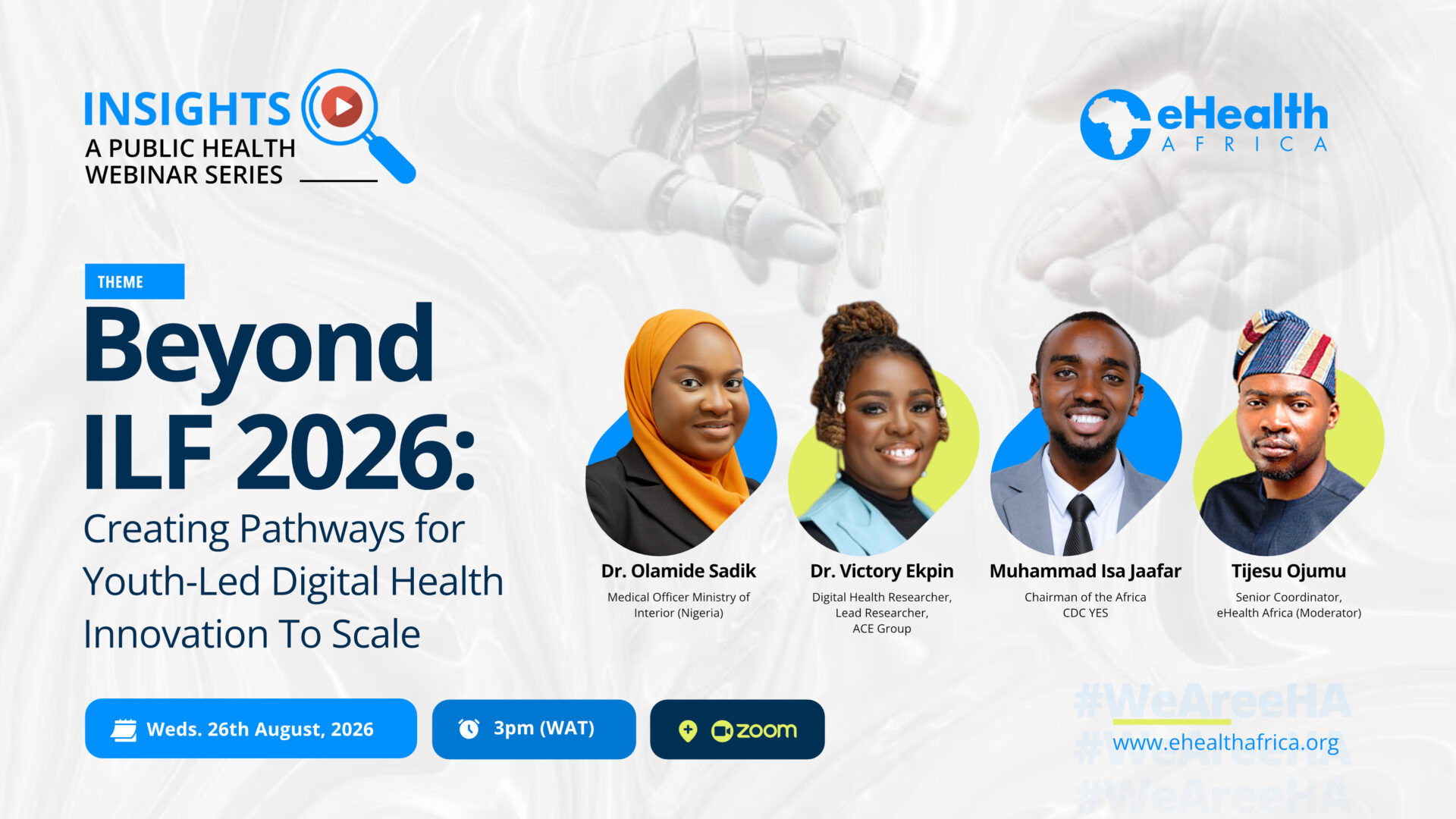
As eHealth Africa continues to convene these monthly Insights Webinars, each conversation builds toward a larger goal: the Insight Learning Forum (ILF). The webinar is more than a monthly dialogue; it is part of a growing pathway where insights can be deepened, challenged, and translated into collective action. Prevention begins long before diagnosis. It begins with trust.

How eHealth Africa is Expanding Immunization Reach with Potent Vaccine Delivery

Moshood Isah

There is no doubt that significant effort goes into expanding vaccination reach, especially to the last mile and by extension, Universal Health Coverage (UHC). One critical aspect of this process is definitely the supply chain process that ensures the right vaccines reach the last mile when needed and in the most potent conditions.  

Vaccines are highly sensitive to temperature variations, including heat, light, and even excessive cold. This makes its delivery especially to underserved remote communities utmostly critical to the general immunization process. Over the last decade, eHealth Africa, with support from Sokoto State Government, Gates Foundation, and Dangote foundation has facilitated the delivery of over 10 million vaccines and dry goods across over 351 Primary Healthcare facilities in the 23 Local Government Areas of Sokoto State. 

In a bid to replicate the impact in Sokoto state across other locations, eHealth Africa recently conducted a comprehensive high-impact capacity building for Direct Vaccine Delivery and Cold Chain officers in Bauchi state. These sessions revealed that delivering vaccines to underserved communities goes beyond moving vaccines from one place to another. Cold Chain officers and delivery officers were exposed to the deployment of digital tools for better accountability and ensuring that, indeed, all vaccines that got to PHCs are safe for consumption.

Health Delivery and Cold Chain officer complete capacity building on potent vaccine delivery

The Program Manager, Disease Prevention and Monitoring, Abubakar Shehu, explained that the capacity-building session conducted by ehealth Africa in partnership with the state government and the Ministry of Health was inspired by the need to bridge existing vaccine delivery gaps in the state. 

Abubakar Shehu said the session is critical not only for ensuring safe vaccine delivery but also for strengthening accountability and potency monitoring. He said, “As a leader in the immunization space with more than a decade of experience, eHealth Africa is exposing partners to important digital tools such as the Logistics Management Information System (LoMIS) and temperature monitoring devices to ensure vaccines reach the last mile and remain accessible to the children who need them most.”

. This, according to him, will go a long way in not just boosting vaccine delivery but bringing more eligible children into the immunization net. 

Leading the capacity building session, eHealth Africa’s Sokoto Vaccine Direct Delivery Coordinator, Ahmadu Bello, revealed that some of the gaps identified are the absence of proper temperature monitoring during vaccine transit. He said, “Vaccines are picked up from the cold store and delivered to facilities, but what happens between the cold store and the facility is not recorded. This lack of accountability could endanger the vaccines. ”

He also pointed out inconsistencies in monthly delivery schedules. “We also observed an inconsistency in monthly delivery schedules. If delivery begins in the first week, it must remain consistent; otherwise, stock-outs may occur. To address this, we encourage coordination between the central cold store, the national level, and the Primary Healthcare facilities  to ensure timely distribution”, he added 

Another critical aspect of vaccine delivery that significantly impacts not only immunization services but overall community health is reverse logistics. Bello emphasized that it is not enough to routinely distribute vaccines to PHCs without carefully assessing actual demand. “Some locations require more medical supplies than others, so it is important to prioritize facilities experiencing higher demand rather than allowing vaccines to sit on shelves elsewhere and eventually expire,” he noted.

He also stressed that the proper disposal of used vials and other dry waste remains essential to prevent harm to health workers and community members. “These are key lessons participants have taken away and will cascade to the colleagues they work with,” he added.

If anything, the sessions have changed the perception of Vaccine delivery officers to understand how their role is directly linked to saving lives and expanding vaccination reach. Relishing the potential impact of the capacity building,  state team lead for Vaccine delivery, Abubakar muhammad said, “Now we understand timely delivery reduces wastage and stock-outs. We also learned the importance of deploying temperature trackers”.

Muhammed  reiterated that the capacity building is a major springboard for improved immunization services in Bauchi state, saying, “With this new knowledge gained, we will deliver vaccines on time and make sure each facility receives vaccines with potency and in good condition.”  

In a similar vein, Pharmacist Muhammad Kabir Salisu, Assistant State Logistics Officer, revealed that his team learned how to maintain vaccine potency from national entry to facility delivery, saying they were introduced to tracking applications and temperature monitoring systems.

He emphasized the need for every personnel in the supply chain to take responsibility for protecting children from vaccine-preventable diseases. He stated, “If you are a health professional and a hospital is built in your community, you should understand it is not meant only for your community. If essential medicines are not delivered properly and a life is lost, that responsibility rests with you.”

He added, “The same applies to immunization. If you do not deliver safe vaccines to the last mile, you are failing the people. That is the message to my entire team.”

Through sustained investment in digital innovation, capacity strengthening, and last-mile delivery systems, eHealth Africa continues to bridge critical gaps in vaccine access and accountability. By combining technology, field expertise, and strong government collaboration, the organization is strengthening supply chains, improving vaccine potency monitoring, and enhancing delivery consistency across states. As these efforts deepen and expand, more communities are gaining reliable access to safe vaccines, reinforcing stronger immunization systems and healthier futures for children.

HPV Vaccine Demand Surges in Communities as Stakeholder Trust Strengthens

Moshood Isah 

Recent experience shows that misinformation, often coupled with mutual distrust among public health personnel and other stakeholders, is the bane of immunization campaigns, especially in remote communities in Africa.  While it may sound weird that in 2026, vaccine hesitancy is still being experienced in some communities, it’s only valid that human beings only trust what they have ample information and education about. 

There is no doubt that organizations have consistently conducted awareness programs to support various immunization campaigns. However, it remains essential to continuously evolve strategies that reach more communities with accurate and timely information.

 For instance, the head of social mobilization in Bauchi Local Government Education Authority (LEA ) of the state, Ahmed Rufai Mukaddas, noted that caregivers often remain suspicious about the rationale behind the Human Papillomavirus (HPV) vaccine, which targets young girls between 9 and 14 years. 

I recall a situation where a caregiver rushed into a school during an HPV vaccination exercise to withdraw her children to prevent them from receiving the vaccine.” He said.  According to Rufai, all efforts to convince the caregiver at the time proved unsuccessful. The reasons for such reactions are not far-fetched. With the growing number of vaccines aimed at preventing various diseases, awareness remains inadequate in communities that lack consistent public health education. As a result, misconceptions and misinformation continue to fuel distrust.

Victoria Andrew, a caregiver and mother of three girls, shared a similar perspective: “Many people believe vaccination is a form of contraception or child spacing. Some mothers fear it will affect their children as they grow.”

She recounted the story of a neighbor with ten daughters who never allowed her girls to be vaccinated. Tragically, one of the daughters now struggles with mobility due to Acute Flaccid Paralysis (AFP), commonly associated with poliovirus infection. This outcome could have been prevented through proper awareness and the demystification of long-standing misconceptions.

Recognizing these challenges, eHealth Africa and the United Nations Children’s Fund (UNICEF) strengthened collaboration between the health and education sectors, while deepening community engagement. These efforts proved vital to the successful intensification of the HPV vaccination campaign in Kano and Bauchi States, Nigeria.

 One strategic approach deployed by eHealth Africa is to precede the HPV intensification campaign with a strategic open co-creation and awareness session. The session provided an avenue for parents, caregivers, school teachers, community leaders, and healthcare providers to have frank conversations on the potential dangers of the HPV.

Speaking on this intervention, eHealth Africa’s project manager, Salahuddeen Sambo Ardo, said, “The session provided a unifying platform to emphasize the critical importance of vaccines in preventing diseases such as cervical cancer.”

He explained that, unlike traditional top-down sensitization approaches, the co-creation model intentionally brought together a diverse group of stakeholders including caregivers, parents, teachers, Parent-Teacher Association (PTA) representatives, community gatekeepers, state health educators, HPV focal persons, and girls aged nine years, the primary target group for the vaccine.

This inclusive structure ensured that both decision-makers and community voices were represented, fostering shared ownership of the vaccination effort,” he added.

Other stakeholder awareness activities for community ward heads, Public Health personnel training, edutainment activities in schools, and Parent Teachers Association programs duly preceded community and school vaccination outreach. 

This was a game-changer and a springboard for increased demand in HPV vaccines across the communities. For instance, Victoria’s perspective changed after attending the co-creation session on HPV vaccination. “I learned a lot, not just for myself, but for others too. As a mother, a Christian, and a Sunday school teacher, I realized that vaccines are safe and an essential first step in preventing disease.”

Hadiza Ahmed, who led these activities in Bauchi state, said the outcomes of the co-creation and edutainment activities were very encouraging. “Not only did the girls become advocates among their peers, but parents also began taking greater responsibility to ensure their daughters and other eligible girls in their communities were vaccinated”.  Hadiza, who is also leading the activities of the Emergency Operation Center in the state, said that, during the community outreach efforts, demand significantly increased as school heads have since expressed strong interest in continuing these outreaches within their communities. “In fact, vaccine supply shortages limited our ability to meet the full demand generated”, she revealed.

This was corroborated by Ahmed Rufai saying that one of the major delays experienced during the HPV intensification campaign was limited access to vaccines at some point. “For instance, in Rafin Makaranta, massive awareness and mobilization led to increased turnout for HPV vaccination; however, the available vaccine was not sufficient at the time, he said .”

The surge in HPV vaccine demand reflects growing trust, stronger partnerships, and communities taking ownership of their health. It is essential not only to sustain this momentum but to expand HPV intensification efforts to additional communities. More importantly, consistent vaccine availability must be ensured while community engagement continues. With sustained effort and strong partnerships, more girls can be protected early, and the long-term burden of cervical cancer can be significantly reduced.

Before the Crisis: Why Strong Planning Systems Are Key to Public Health Preparedness

Oyindamola Fashogbon


Vaccine Direct Delivery (VDD) in Sokoto captures the essence of efficient vaccine distribution. VDD ensures the seamless transfer of vaccines and dry commodities from the state cold store to ward-level health facilities. This image highlights the precision and dedication of VDD’s logistics, emphasizing its critical role in enhancing healthcare delivery.

Public health emergencies rarely fail because of a lack of intent.  They fail because systems designed for routine service delivery are suddenly pushed beyond their limits. When outbreaks occur or large-scale vaccination campaigns are rolled out under pressure, gaps in data, planning, and coordination become visible and as expected, the most vulnerable communities often feel the greatest impact.

Emergency preparedness, therefore, is not only about rapid response. It is about whether systems are already equipped to absorb shock, adapt quickly, and deliver at scale. In many African nations, emergency health responses rely on planning methods built on rough population estimates, static maps, and assumptions that no longer reflect on-the-ground realities. In densely populated, highly mobile urban environments, these limitations can translate into missed households, uneven workload distribution, and delayed corrective action.

Preparedness means moving from reactive planning to systems that allow governments and partners to see, plan, and act clearly before pressure peaks

What Public Health Emergency Preparedness Looks Like in Practice

As Lagos State implements the Measles–Rubella Vaccination Campaign for children aged 9 months to 14 years, eHealth Africa, working with UNICEF Nigeria  supported to strengthen the planning backbone that underpins emergency delivery, ensuring everyone is reached regardless of location and socioeconomic status. Through PlanFeld, eHealth Africa’s digital microplanning solution, four Local Government Areas were supported to transition from estimate-based planning to microplans built on real population data, local settlement patterns, and frontline realities. Health workers were trained not just to use a tool, but to rethink how planning decisions are made, tested, and adjusted. This approach reflects a core preparedness principle: clarity before crisis.

Rethinking Emergency Preparedness with Emergency Operations Centers

The future of public health emergency preparedness will not be defined solely by how quickly vaccines are procured or funds are released. It will be shaped by whether health systems can plan with accuracy, adapt in real time, and translate data into timely, informed decisions that empower those closest to the communities they serve. At the heart of this capability are the Emergency Operations Centers (EOCs).

Preparedness is not a moment of reaction; it is a continuous investment in systems that can anticipate risk, coordinate stakeholders, and respond with precision.

EOCs serve as the nerve centers of emergency preparedness and management, spaces where data from multiple sources converges to guide action. With 12 functional EOCs across Nigeria, there is a growing opportunity to institutionalize data-driven decision-making. Information from geospatial tracking systems, compliance monitoring, missed settlements, vaccination coverage gaps, and field-level activity reports generated by various health players and stakeholders can be consolidated, visualized, and analyzed in near real time. 

When structured effectively, this intelligence enables rapid course correction, equitable resource allocation, and stronger accountability across response efforts. EOCs transform fragmented data into operational clarity. They help leaders identify where teams are overstretched, where communities are underserved, and where additional support is required before gaps widen into crises.

Preparedness, therefore, is not only about stockpiles and surge financing. It is about building decision-ready systems that function before, during, and after emergencies. When EOCs are empowered with accurate, actionable data, responses become faster, smarter, and more inclusive, ensuring that no community is left behind.

Village Head Extols Health Delivery Officers for Bringing Vaccines to the Last Mile

“This Is Not Just Work, It’s a Sacrifice

BY Fatimah Azeez Ayomitide

Although Magaji Bashir Sambo assumed the position of village head of Sarkin Zamfara in  Sokoto South, Northern Nigeria, in 2022, his education in the health of his people began decades ago.

“When my father was alive, there were health issues that bedevilled us – sicknesses that caused diarrhea and vomiting, and diseases we didn’t even know the origin of,” Magaji recalls.  He said, “We would see a child fall sick with something we had never seen, and we had no idea how to cure him.”

According to him, the skin of a sick child might look “burnt” from measles, or families would watch helplessly as neighbors were swept away by outbreaks of Yellow Fever or Whooping Cough. Today, Magaji Bashir describes those days as a fading memory, thanks to a hard-won bridge of trust between traditional leadership and modern medicine.

The path to a healthier life wasn’t always smooth. Magaji Bashir laughed as he remembered the early days of sensitization. “I remember situations where someone once chased us with a pestle,” he said. At the time, vaccines were a mystery, often viewed with suspicion as something “from abroad” designed to cause harm.

As a future leader, Magaji learned to listen rather than react. When a community member rejects vaccination, he wouldn’t argue in the street. Instead, he would invite them to his home. “There, we would have a one-on-one conversation,  community member to community member. We asked what their fears were. We answered their questions.”

The Turning Point: 2016

The real shift in the community’s heart happened during the traumatizing Cerebrospinal Meningitis (CSM) outbreak of 2016/17. Magaji recalled how people died in a span of hours. It was during this crisis that organizations like the World Health Organization (WHO) and eHealth Africa (eHA) stepped in, not just with vaccines and a dedicated testing lab, but with humanity. “In the hospital camps, food was provided; breakfast, lunch, and dinner to patients and sometimes, their families,” Magaji explained. “All these efforts were witnessed firsthand. It helped allay the fears that ‘the West is trying to hurt us.'”

Today, the challenge isn’t just trust. It’s logistics. This is where eHealth Africa’s Vaccine Direct Delivery (VDD) program comes in. Magaji Bahsir always watched the VDD vehicles ply the difficult Sokoto terrain with a sense of wonder.”I always wondered if the car was a mobile refrigerator,” he says. “No matter how long or far they drove, the vaccines never spoiled.”

He noted that the VDD teams do more than just drop off boxes. They act as the silent guardians of the local Primary Healthcare Centers (PHCs). According to him, they check the fridges, remove expired vials, manage medical waste, and ensure the stock is perfect. This allows local health workers to stop worrying about logistics and start focusing entirely on patients.

More Than Just “Work”

For Magaji Bashir Sambo, the presence of eHealth Africa in the villages of Sokoto is more than a program; it is a lifeline. “I call it a sacrifice,” he says, reflecting on the 144TH round of VDD. “No matter the financial benefit, taking the time to go the distance to communities that are not always safe… that’s not just ‘work.’ It’s a great service to humanity.”

As the VDD trucks roll out of Sarkin Zamfara to the next last mile”village, they leave behind more than just vaccines. They leave behind a community that no longer fears the unknown, led by a man who knows exactly how to keep them safe.

How eHealth Africa is Expanding PlanFeld Deployment to Boost Vaccination Reach in Nigeria 

Moshood Isah

“What can be better? This tool will automate everything;Microplan and Daily implementation Plans for the state during campaigns” – Incident Manager, Katsina State Emergency Operation Center, Kabir Suleiman.

Six Months ago, eHealth Africa conducted a User Acceptance Testing (UAT) for PlanFeld; a digital microplanning tool with Public Health partners and major stakeholders from National and state Emergency Operations Centers (NEOC) in Nigeria.  Thus UAT provided a blueprint for  a paradigm shift from manual to digital microplanning for vaccination campaigns across Nigeria

The  powerful demo session revealed how PlanFeld saves time, promotes accuracy and boosts vaccination reach across Communities. This was preceded by feedback to the pilot conducted in Kebbi state showing that the percentage of missed settlements dropped from 19% to 8%, and later to 6% of the targeted population.  This not just secured the endorsement of key stakeholders but led to calls to further expand its deployment across the country. 

It became pertinent to decentralise and expand the deployment of the digital tool across more states especially in Northern Nigeria. With support and backing from the National Primary Healthcare Development Agency (NPHCDA) and National Emergency Operation Center, eHealth Africa team led a comprehensive rollout plan, engaging State stakeholders on the strategies and processes required for effective deployment of the PlanFeld application.

Led by eHealth Africa’s Program Manager on Disease Prevention and Monitoring, Abubakar Shehu, the team engaged State Commissioners of Health, Executive and Permanent  Secretaries and key personnel in State Ministries of health.  During the engagement across Jigawa, Kaduna, Kano, Katsina, Kebbi, Niger, Sokoto, and Zamfara, Abubakar reiterated that, deployment of PlanFeld for microplanning aligns with eHealth Africa’s vision of reaching underserved communities with healthcare using user-friendly and human-centered tools. 

He said, “the success of PlanFeld in Kebbi state Outbreak Response (OBR 4) is a springboard that spurs the organization to further decentralise the engagement to other states especially in northern Nigeria”.  Abubakar commended eHealth Africa’s State and LGA coordinators across the implementing states for their continuous commitment towards achieving about 100% Master List of Settlement (MLoS) with accurate geocoordinates despite the enormous huddles. 

Having been deployed in the state during the pilot, the then Honourable Commissioner of Health in Kebbi state, Alhaji Yakubu Bala Tafida expressed enthusiasm about the innovation, commending the team for selecting Kebbi State as a pilot location. He also emphasized the importance of leveraging technology and innovation to address public health challenges while  encouraging eHealth Africa to continue exploring and deploying solutions that add value to the health system, both at the State and National levels.

The feedback in Sokoto state was similar to that of Kebbi State. The  Commissioner of Health, Dr. Faruk Umar Abubakar Wurno, lauded eHealth Africa for leading the drive for the transition from manual to digital microplaning . He said, “the ongoing shift away from manual processes, the introduction of digital solutions such as PlanFeld is both timely and commendable”.

Represented by the ministry’s Permanent Secretary the Commissioner of Health, Niger state said, the  laudable efforts will be presented to the Executive governor  as he is highly interested in technological advancements which would enhance the state’s health sector as well as other non health interventions. In the words of the Permanent Secretary “I am excited hearing about digitization since the world is going towards that direction, hence my choice of pulling out from a meeting at the government house to receive your team.The future is promising and assured with tools like PlanFeld”. 

Beyond endorsement of a novel digital solution that has been tested, important  gatekeepers in the public health space have consistently committed to providing an enabling environment to enable digital solutions to thrive. This is evident in the words of the Health Commissioner in Kano state, Dr Abubakar Labaran Yusuf when he said “We are ready to roll out in Kano state so we are expecting our Microplans and Daily Implementation Plans as quickly as possible”.

In Katsina state, not just the public health stakeholders support the deployment of digital micro planning tools in their states but security agencies also pledged to continue protecting vaccinators especially in security-compromised locations. The Area Commander of Funtua Assistant Commissioner of Police ACP Musa Hamza Yusufari acknowledged the importance of reaching communities with the right medical supplies irrespective of location.  He said, “It is our responsibility to protect everyone within the community; asides that, we are direct beneficiaries of your interventions so we will not relent in providing all the necessary support especially to you and your team”.

During the feedback sessions Director of Partnerships and Programs, Ota Akhigbe, commended the team for their role in ensuring Planfeld became a household name in the digital health space. She said the tool has the potential of achieving a lot even beyond polio campaigns to general routine immunization interventions.

The outcome of these engagements across these 8 states is already visible. The transition to the utilization of digital microplanning for vaccination campaigns has kicked off in earnest. eHealth Africa with support from Gates Foundation and NPHCDA have successfully rolled out PlanFeld for the ongoing vaccination campaign in Jigawa, Kaduna, Kano, Katsina, Kebbi, Niger, Sokoto, and Zamfara. 

The early impression is the effective allocation of workload to various vaccination teams based on their target population. This goes a long way in boosting workload optimization thereby ensuring vaccinators and health personnel reach every assigned child without being over stretched.  And just as the Commissioner of Health in Kano state said ahead of the roll out, “We will be expecting the outcome of digitized Microplans in the coming rounds of campaigns’-Kano state HC of Health”. 

Looking forward to 2026, collaboration with the NEOC and NPHCDA strengthened remains critical policymaker buy-in, while early engagement with the State created a strong foundation for adopting and using the digitized microplan. With existing evidence-backed use cases,  the scalability of PlanFeld solution increases stakeholder willingness to transition from paper-based to digital microplanning.

As states continue to embrace digital microplanning, PlanFeld is positioned to play an even greater role in strengthening vaccination systems across Nigeria. With growing stakeholder confidence, expanding partnerships, and a clear pathway for scale, the momentum toward a fully digitized, more efficient, and more equitable immunization landscape is stronger than ever. 

BISKIT : Saving Lives with Smart Blood Information System  

By Moshood Isah

Low- and middle-income countries have consistently struggled to meet blood donation requirements compared to their high-income counterparts. While high-income nations meet most of their blood needs through voluntary donation, Africa continues to face severe shortages, with only about five percent of its population donating blood. Maternal mortality remains devastatingly high, with the continent accounting for nearly 70 percent of global maternal deaths.

Earlier this year, in June, World Blood Donor Day was commemorated across the globe. This important day raises awareness about the need for safe blood and blood products, while also celebrating voluntary, unpaid donors for their life-saving contributions. According to the World Health Organization (WHO), a blood service that provides patients with safe blood and blood products in sufficient quantities is a key component of an effective health system.

This understanding informed the partnership between eHealth Africa, Sirat Al-Mustaqeem, and Bayero University Kano to host a major blood donation drive. The event not only raised awareness about the lifesaving importance of blood donation but also introduced participants to a digital blood information system designed to make the entire process seamless and efficient.

During the blood donation drive at Bayero University Kano, eHealth Africa deployed its mobile, user-friendly digital application that allows individuals to easily schedule blood donation appointments at their convenience. The Blood Information System for Crisis Intervention and Management (BISKIT) App provides real-time access to available donation centers, dates, and time slots—empowering donors to plan ahead and integrate blood donation into their personal schedules.

BISKIT was seamlessly integrated into the donation process, managing donor registration digitally and ensuring a smooth, organized experience for all participants. This not only enhanced the donor journey but also demonstrated the vital role technology plays in strengthening healthcare systems. “People want to donate,” said Oscar Kalu, a Research Assistant at Aminu Kano Teaching Hospital, where BISKIT is currently being piloted. “They just need a system that respects their time and gives them confidence. BISKIT does both.”

According to Oscar, BISKIT eliminates inconsistent paper records that are slow to retrieve, prone to delays, and at risk of loss. “This wasn’t just another awareness campaign; it was a digital shift in blood information management,” he said. With a few simple steps, donors could register, book appointments, access their digital donor card, and later track their donation history—an innovation he believes could finally close the dangerous gaps in Africa’s blood management system.

A supply chain management expert with eHealth Africa, Mohammed Faosy-Adeniran, reinforced this viewpoint, explaining that BISKIT was built to address preventable causes of death. “If a health facility cannot trace blood—from who donated it to who handled it—we cannot guarantee safety, and we cannot save lives,” he said.

He recalled mothers who died from postpartum hemorrhage because blood was unavailable, children with sickle cell disease whose crises became fatal due to delays, and accident victims who never received transfusions in time. Mohammed, who led the BISKIT pilot implementation with AKTH, believes that if every donated unit can be tracked, stored correctly, tested promptly, and delivered safely, the entire system becomes stronger.

With BISKIT, every donor, every test, every storage stage, and every transfusion is recorded digitally. Within seconds, a health worker can view the complete journey of a single blood unit. They can generate instant reports, track progress, and trace issues immediately. Most importantly, they can ensure the blood reaching a patient is safe, timely, and fully accounted for.

The potential to scale BISKIT across more primary healthcare facilities remains promising. According to Project Manager Darlington Okoye, the application has already transformed the blood services workflow by digitizing over 6,000 donor records in 2025 alone, ensuring data is accurate, accessible, and secure. BISKIT also certified 5,300 donors as fit to donate—significantly strengthening the safe donor pool. “More than 500 successful blood transfusions were tracked electronically, enabling faster emergency response through instant access to donor and recipient records,” Okoye added, noting that automated compatibility checks have drastically reduced the risk of mismatched transfusions.

BISKIT is more than an app. It is a revolution in how Africa approaches blood safety. It is a bridge between donors and the people whose lives depend on them. It is a digital lifeline that connects people, systems, and hope, proving that when technology and compassion work together, lives are not just touche, they are saved.