Press Release
Over 23 Million Children Reached Through Vaccination Campaigns as eHealth Africa Records ₦166 Million in Energy Cost Savings for Primary Healthcare Facilities
- eHealth Africa’s H1 2026 Report highlights vaccination campaigns across more than 205,000 settlements, supported by Geospatial Tracking Systems and other digital solutions
[ABUJA, Nigeria | September 10, 2026] — More than 23 million children were reached and vaccinated against polio and other vaccine-preventable diseases during vaccination campaigns supported by eHealth Africa across more than 205,000 settlements in Nigeria in the first half of 2026. This comes as the organization expanded the use of digital technology, Geospatial Tracking Systems (GTS), renewable energy solutions, laboratory infrastructure, and public health coordination systems to strengthen healthcare delivery in Nigeria and across Africa.
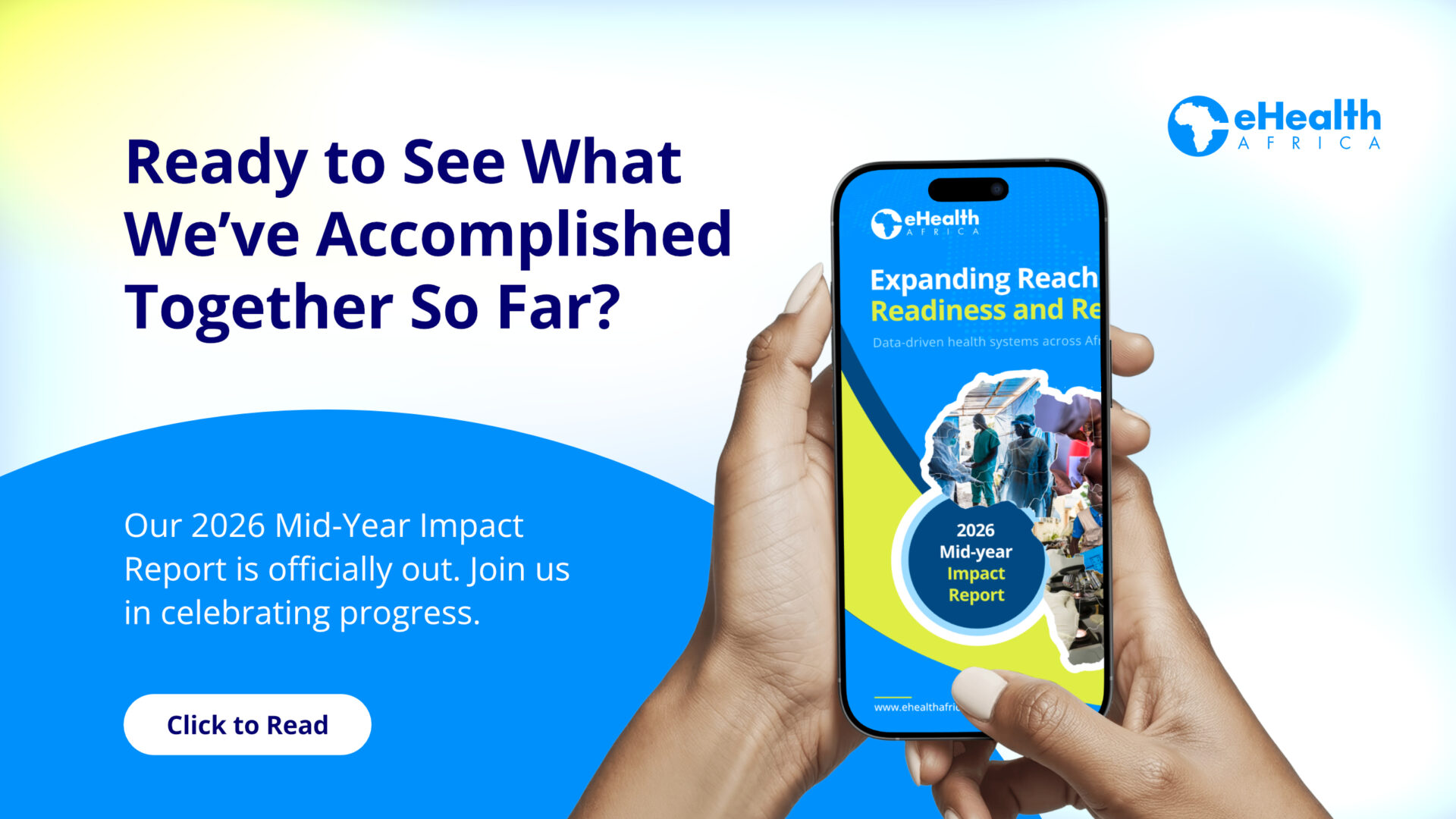
The 2026 Mid-Year Report, titled “Expanding Reach, Readiness and Resilience: Data-Driven Health Systems Across Africa,” highlights eHealth Africa’s interventions between January and June 2026, demonstrating progress in expanding access to essential health services, strengthening preparedness for public health emergencies, and building more resilient health systems across Africa.
“The significance of these results goes beyond the numbers. They reflect what becomes possible when governments, communities, technology, infrastructure, and local expertise work together to strengthen the systems behind healthcare delivery,” said Atef Fawaz, Executive Director of eHealth Africa. “Our focus is not simply on deploying solutions, but on building systems that institutions can own, sustain, and continue to improve.”
In partnership with its immunization partners, eHealth Africa expanded the deployment of its in-house PlanFeld digital tool across 253 Local Government Areas in 10 northern states, supporting 33,837 vaccination teams with digitized microplans and catchment-area maps. The technology was also deployed across four LGAs in Lagos State during the Measles-Rubella campaign, where 1,980 digitized maps were produced and distributed to vaccination teams.
The report also highlights progress in strengthening the last-mile vaccine supply chain in Sokoto State. Through the Vaccine Direct Delivery (VDD) intervention, the number of health facilities served increased from 351 to 407, with approximately 3.41 million vaccine antigens delivered to support immunization services in underserved communities.
Beyond immunization, eHealth Africa reported significant financial and environmental gains from investments in renewable energy for primary healthcare. Through the Renewable Energy for Primary Health Care (RE4PHC) intervention, supported by UNICEF, eHealth Africa solarized 238 PHCs across 12 states. In H1 2026, 226 remotely monitored facilities generated 277,800 kWh of solar electricity, avoiding an estimated ₦166 million in fuel costs and 240 metric tons of CO₂ emissions. Since inception, estimated fuel savings have exceeded ₦414 million.
eHealth Africa strengthened diagnostic and disease-surveillance capacity across Africa, supporting 17 laboratories in 13 countries and expanding its Inventory Management System to 18 laboratories. Upgrades to five laboratories across Ghana, Zambia, Nigeria, and Cameroon were also completed and handed over, strengthening infrastructure for diagnosis, surveillance, and outbreak response.
Public health emergency preparedness remained another major area of investment. The 11 Emergency Operations Centers supported and managed by eHealth Africa in Nigeria continued to serve as coordination platforms for government agencies, surveillance teams, immunization officials, and development partners. During H1 2026, the centers hosted 546 emergency coordination meetings, supported 102 campaign-related meetings, and produced 74 public health scorecards to support planning and performance monitoring.
The organization also expanded community-level surveillance of antibiotic availability and suspected substandard and falsified medicines through Com-WATCH. Across Kano, Gombe, Ekiti, Ebonyi, Akwa Ibom, and the Federal Capital Territory, 2,512 surveillance actors were enrolled, 2,763 medicine vendors and other actors were trained, and more than 20,500 community members were reached with sensitization messages. By mid-year, 977 medicine outlets were reporting stock information through the platform.
In humanitarian operations, eHealth Africa’s management of the World Food Programme Common Storage facility in Ngala, Borno State, supported 16 humanitarian partners. The warehouse handled 691 metric tons and 2,527 cubic meters of commodities, with six monthly physical inventories completed and no stock losses reported during the period.
Across these interventions, the report points to a broader shift from delivering standalone projects toward strengthening the systems that governments and health institutions rely on to plan, coordinate, and sustain essential health services. The Mid-Year Report is structured around three interconnected priorities: Reach, Readiness, and Resilience. Together, these results demonstrate how eHealth Africa is extending essential health services to more communities, strengthening institutional capacity to detect and respond to public health needs, and investing in the infrastructure, people, partnerships, and local ownership needed to sustain progress over time.
In the second half of 2026, eHealth Africa will focus on consolidating these gains by strengthening institutional ownership and the sustained use of deployed systems, completing ongoing investments, and generating stronger evidence of how improvements in system performance translate into more reliable health services and better outcomes for communities.
Read the full eHealth Africa 2026 Mid-Year Impact Report
About eHealth Africa
eHealth Africa (eHA) is a nonprofit organization dedicated to strengthening health systems across Africa through the design and implementation of data-driven solutions. Over the past 15 years, eHealth Africa has developed a robust technology and operational platform specifically designed to address public health challenges. By opening its platforms to collaboration, eHA accelerates the adoption and impact of innovation. The organization’s work spans 24 African countries, including Chad, Liberia, Cameroon, Tanzania, Madagascar, and Zimbabwe. For more information, visit www.ehealthafrica.org.
Media Contact:
Favour Oriaku
Communications Manager, eHealth Africa
Favour.oriaku@ehealthafrica.org