Events
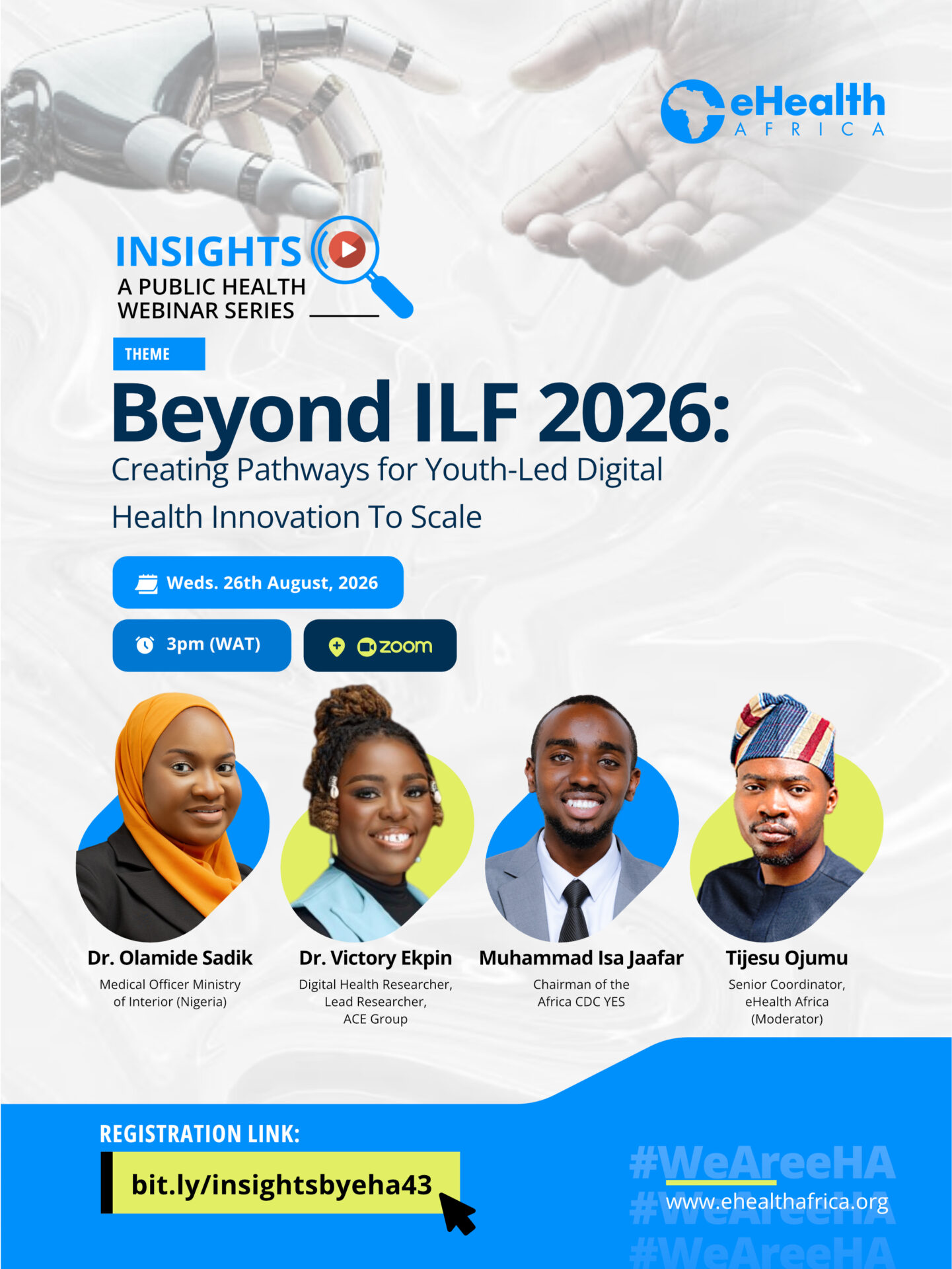
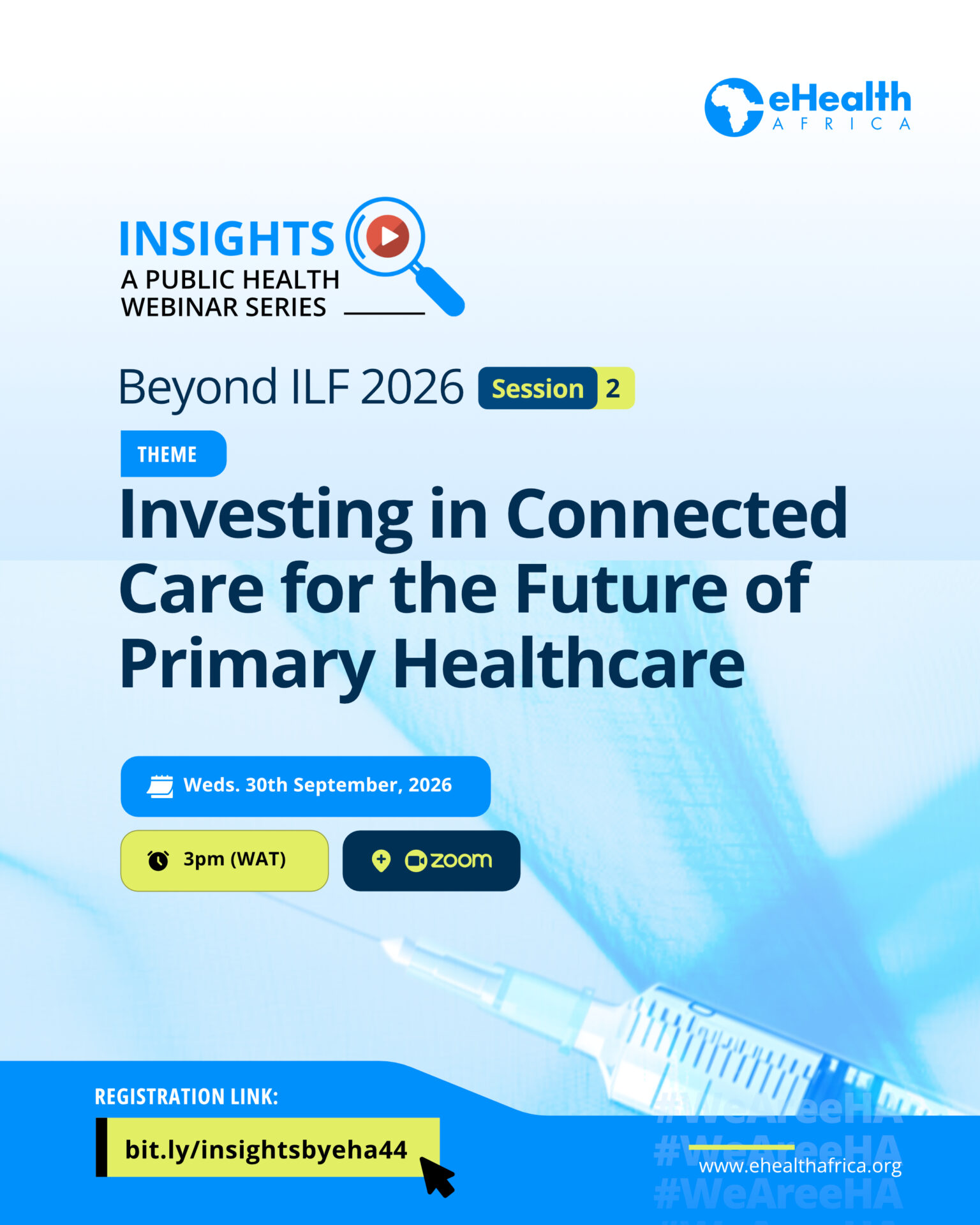
Insights: Beyond ILF 2026: Investing in Connected Care for the Future of Primary Healthcare
Panelists
- Dr. Ifunanya Ilodibe – CEO, EHA Clinics – Confirmed
- Dr. Ahmed Ogwell – CEO and President, VillageReach – Pending confirmation
- Dr. Nkemdilim Femi-James – CEO, Preston Associates International Development (PAID) – Pending confirmation
- Loic Banybah – COO and Co-founder, Allo Docteur – Confirmed
Moderator
Tijesu Ojumu – Senior Coordinator, Communications, eHealth Africa
Summary
The Beyond ILF 2026 webinar, “Investing in Connected Care for the Future of Primary Healthcare,” continued the conversation from the Insights Learning Forum (ILF) 2026 on how Africa can move from fragmented healthcare investments towards connected systems of care. The discussion focused on what governments, healthcare providers, communities, funders and digital health innovators need to do differently to ensure investments translate into sustainable systems and measurable improvements in people’s health.
Speaking from a healthcare delivery perspective, Dr. Ifunanya Ilodibe argued that one of the most important shifts must be in how success is defined and funded. She noted that healthcare investments are often measured by outputs such as the number of facilities built or digital systems deployed rather than the outcomes those investments produce. She called for governments, funders and implementers to increasingly measure and finance improvements that change a patient’s health trajectory, including better quality of care, earlier detection and reductions in preventable deaths.
Dr. Ilodibe also described connected care from the patient’s perspective, emphasising that healthcare should be understood as a journey rather than a series of isolated encounters. She explained that patient information should be able to move with the individual from community-level care to primary healthcare facilities, diagnostics, pharmacies and referral facilities. This would reduce the fragmentation that currently requires patients to repeatedly explain their medical history and enables healthcare providers across different levels of care to make better-informed decisions.
From a health-systems and policy perspective, Dr. Ahmed Ogwell identified reliable financing at the primary healthcare level as a critical requirement for connected care. He argued that resources already budgeted for health facilities should be released consistently, in full and on time, creating a stronger foundation for facilities to plan and deliver the services their communities need.
Dr. Ogwell further stressed that community participation must move beyond consultation towards genuine influence over healthcare priorities and resources. He proposed strengthening the authority of facility and community health committees so they can contribute meaningfully to budget decisions and monitor how resources are used. He also highlighted social accountability, including greater public disclosure of resources received and how they are spent, as an important mechanism for strengthening trust and ensuring investments respond to community priorities.
Speaking from the digital innovation perspective, Loïc Banybah argued that Africa must move from conversations about collaboration to actually working together. He noted that principles such as integration, government ownership, community involvement and sustainability are already widely understood, but the greater challenge is translating them into action. This requires stakeholders to come together around clearly defined health problems, agree on responsibilities and implement solutions that can become part of existing health systems rather than operate alongside them.
Banybah also emphasised that digital health solutions should be approached first as healthcare interventions rather than technology projects. Technology may function effectively on its own but still have limited impact if it does not connect with how healthcare is organised and delivered. Digital innovation should therefore strengthen existing patient pathways and connect people with healthcare professionals and services rather than create parallel systems.
Throughout the discussion, the panelists reinforced that connected care cannot be achieved through technology, financing or infrastructure alone. It requires stronger links between communities, frontline healthcare services, patient information, financing and digital innovation, supported by clear responsibilities and collaboration across governments, healthcare providers, funders, communities and the private sector.
The session reinforced a clear message: Africa’s healthcare systems will become stronger not simply by investing more, but by investing differently. Moving from fragmented interventions towards connected primary healthcare will require investments that follow the patient journey, respond to community priorities, integrate with existing health systems and are ultimately measured by the improvements they deliver in people’s lives.