Events
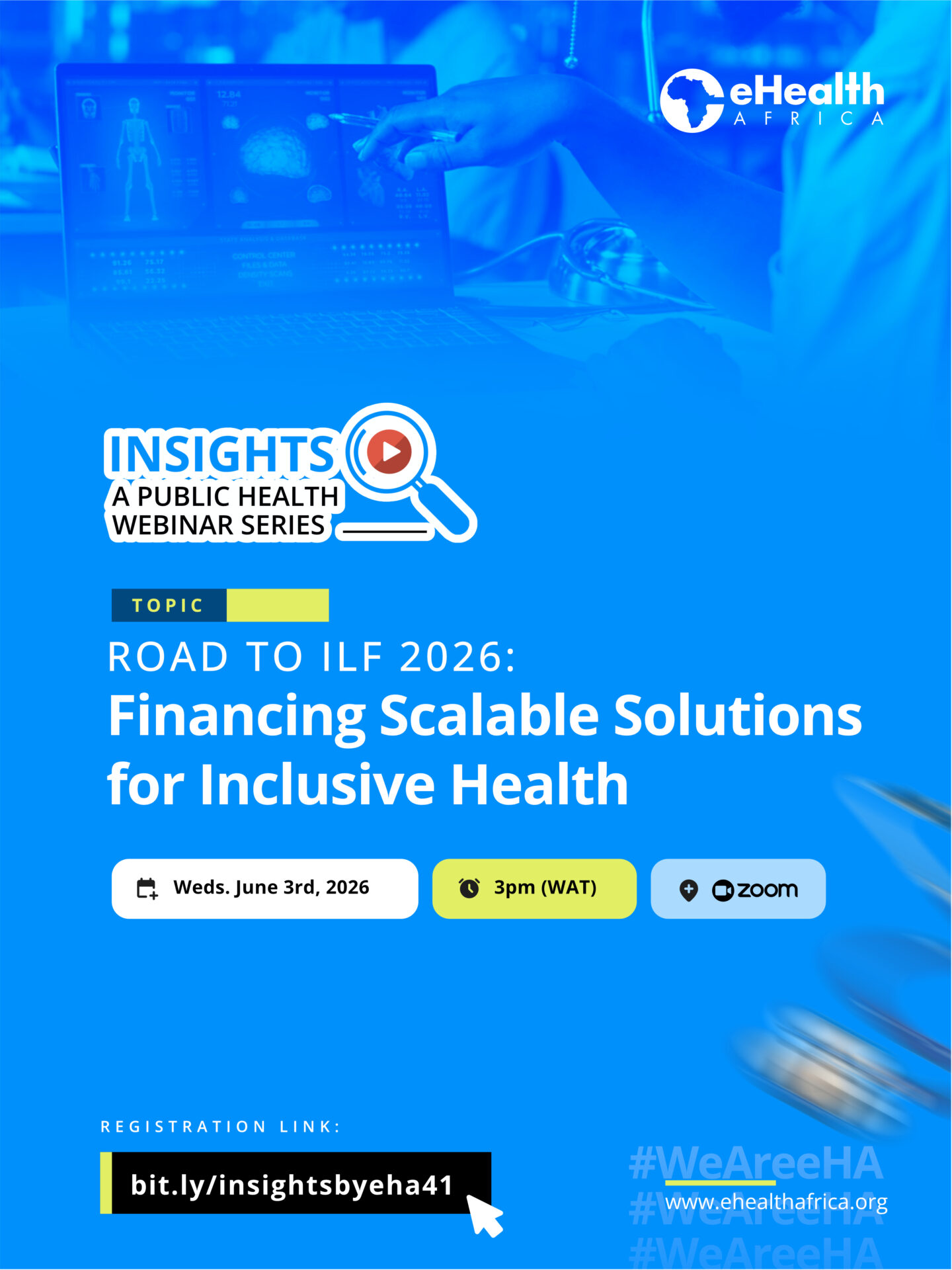
Insights : Road to ILF 2026 – Section 1 : Financing Scalable Solutions for Inclusive Health
Moderator:
Audrey Odogu – Senior Business Development Manager, eHealth Africa
Keynote Speaker:
- Jean Philbert Nsengimana – Chairman, African HealthTech Summit (AHTS); Chief Digital Advisor, Africa CDC
Panelists:
- Dr. Francis Ohanyido – Founding Director-General, West African Institute of Public Health (WAIPH)
- Dr. Mories Atoki – Chief Executive Officer, African Business Coalition for Health (ABCHealth)
- Isong Williams Akpan – Deputy Director and Medical Laboratory Scientist, Aminu Kano Teaching Hospital (AKTH)
Summary
The first session of the Road to ILF 2026 Insights Webinar Series, titled “Financing Scalable Solutions for Inclusive Health,” explored the critical financing, policy, and partnership mechanisms needed to accelerate health innovation across Africa. The discussion brought together leaders from public health, healthcare delivery, and the private sector to examine how innovative solutions can move beyond pilot stages to achieve sustainable, large-scale impact.
Delivering the keynote address, Jean Philbert Nsengimana challenged stakeholders to rethink how they support health innovators across the continent. He argued that Africa’s health innovation ecosystem is not lacking ideas or talent, but rather the systems, financing structures, and enabling environments needed to sustain and scale successful solutions. He emphasized the need to finance platforms rather than pilots, reduce regulatory barriers, measure indicators that enable scale such as equity and interoperability, and intentionally connect founders to investors, regulators, and implementation partners.
From a public health perspective, Dr. Francis Ohanyido highlighted the need to recognize health data as a strategic asset and address the perception of health innovation as a high-risk investment. He advocated for blended financing models that combine development finance, private capital, philanthropy, and government resources. He also stressed the importance of treating healthcare as infrastructure rather than a cost, strengthening primary healthcare systems, and adopting outcome-based financing approaches that prioritize equity and long-term sustainability.
Speaking from the healthcare delivery and laboratory systems perspective, Isong Williams Akpan identified sustainability and continuity as major barriers to scaling innovation. He noted that many promising projects receive pilot funding but struggle to secure long-term support. According to him, successful scale requires patience, progressive implementation, and stronger collaboration among governments, researchers, investors, and development partners. He emphasized blended finance and multi-stakeholder engagement as essential pathways for achieving lasting impact.
Focusing on private sector engagement, Dr. Mories Atoki underscored the untapped potential of public-private partnerships (PPPs) in strengthening health systems. She argued that private sector contributions extend beyond funding to include expertise, technology, infrastructure, leadership, data, and operational capacity. She called for more strategic collaboration between healthcare stakeholders and industries such as banking, telecommunications, and technology, while emphasizing the importance of trust, transparency, and clearly defined partnership agreements.
The panel also examined the policy environment required to support scalable digital health solutions. Speakers agreed that while many policies already exist, implementation remains a significant challenge. Key priorities identified included regulatory harmonization, stronger data governance frameworks, financial inclusion mechanisms, digital equity policies, and improved collaboration among governments, private sector actors, researchers, and investors. The discussion highlighted the need for innovators to engage policymakers proactively and help shape regulations that support responsible innovation.
Throughout the session, recurring themes included blended finance, sovereign adoption of innovations, interoperability, implementation continuity, and the importance of building ecosystems that support long-term growth. Panelists emphasized that achieving inclusive health outcomes requires coordinated action across sectors, stronger financing structures, and deliberate efforts to move successful solutions from pilot projects to sustainable systems.
The session concluded with a call to action for governments, funders, innovators, and development partners to strengthen collaboration, invest in scalable solutions, and prioritize sustainable financing models that deliver measurable impact. Ultimately, participants agreed that innovation alone is insufficient; meaningful progress depends on effectively connecting financing, policy, partnerships, and implementation to build resilient health systems across Africa.