Events
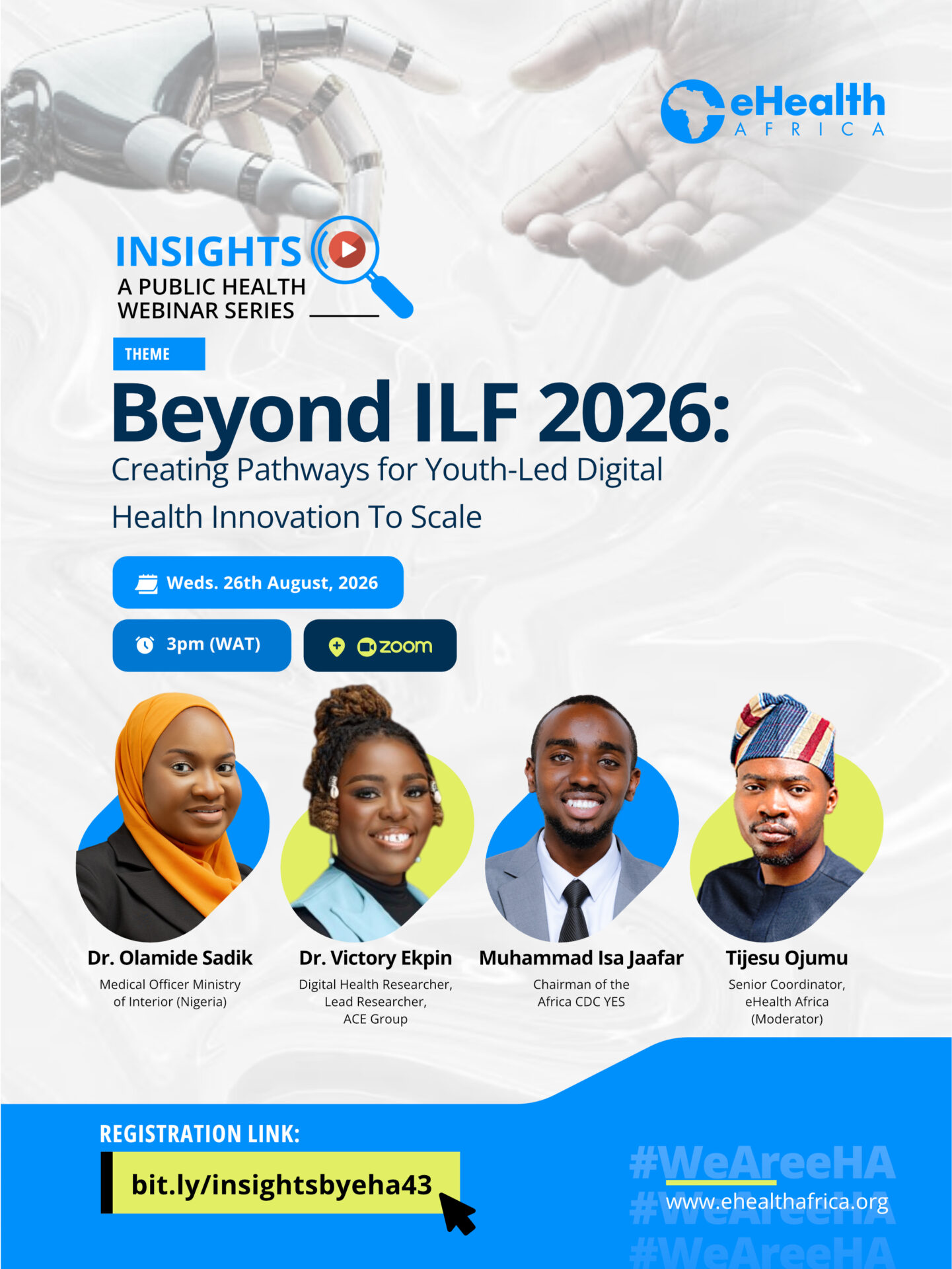
Insights : Beyond ILF 2026: Creating Pathways for Youth-Led Digital Health Innovation
Panelists
- Dr. Olamide Sadik – Medical Officer Ministry of Interior (Nigeria)
- Dr Victory Ekpin – Digital Health Researcher, Lead Researcher, ACE Group
- Muhammad Isa Jaafar (Chairman of the Africa CDC YES)
Moderator
Tijesu Ojumu , Senior Coordinator, eHealth Africa
Summary
The Beyond ILF 2026 webinar, “Creating Pathways for Youth-Led Digital Health Innovation,” continued the conversation from the Insights Learning Forum (ILF) 2026 on how Africa can move young people beyond simply participating in digital health conversations to becoming trusted partners in strengthening health systems. The discussion explored the practical pathways young innovators need to move from promising ideas and pilots towards institutional engagement, evidence generation, adoption and sustainable scale.
Speaking from a youth engagement and health-policy perspective, Muhammad Isa Jaafar argued that meaningful youth participation requires institutional architecture rather than goodwill alone. While acknowledging Nigeria’s domestication of the Africa CDC Youth Engagement Strategy as an important step, he stressed that policies must translate into structures young innovators can actually navigate. He called for dedicated youth structures within ministries, health agencies and other institutions, with clear and accessible channels through which innovators can present ideas, understand government priorities and access opportunities. According to him, young people should not have to rely on personal relationships to find their way into the health system.
Dr. Victory Ekpin focused on moving young people from token participation to genuine co-creation. She argued that young people should contribute across the innovation journey, including defining problems, designing and testing solutions, research, policy and implementation. She also emphasised the importance of understanding the health system before developing solutions, noting that creativity alone is not enough. Young innovators need opportunities to co-design with experienced professionals, test solutions in real-world environments, generate credible evidence and access pathways to financing and scale.
From an implementation perspective, Dr. Olamide Sadik highlighted the bureaucracy and fragmented processes young researchers and innovators can encounter when engaging health institutions. She proposed a more unified approach to approvals that brings relevant ethical, regulatory and data-protection processes together, reducing unnecessary delays without weakening essential safeguards. She argued that simplification and strong oversight can work together to make the system more accessible to innovators.
Dr. Sadik also highlighted the distinction between mentorship and sponsorship, noting that young innovators need more than advice. They also need access to institutions, communities, networks and implementation opportunities, as well as established organisations willing to lend their credibility to promising innovators. She stressed that youth inclusion should not become a checklist but should instead be embedded within institutional policies and ways of working.
Throughout the discussion, panelists agreed that young innovators cannot be expected to navigate the journey from idea to scale alone. Governments and established institutions need to create clearer entry points, while universities, researchers, implementing organisations and other partners can strengthen health-system knowledge, provide opportunities to test innovations, support evidence generation and open pathways to financing and institutional adoption. At the same time, young innovators must understand the systems they seek to strengthen, collaborate across generations and develop solutions that respond to genuine health-system priorities.
The session concluded with a clear message: creating a seat at the table is only the beginning. Meaningful youth participation requires clear institutional pathways, access, evidence, collaboration and opportunities to translate promising innovations into solutions that can strengthen Africa’s health systems. Moving from youth inclusion to integration will therefore require deliberate action from both young innovators and the institutions with the influence and resources to help their ideas move from promise to sustainable impact.