“What can be better? This tool will automate everything;Microplan and Daily implementation Plans for the state during campaigns” – Incident Manager, Katsina State Emergency Operation Center, Kabir Suleiman.
Six Months ago, eHealth Africa conducted a User Acceptance Testing (UAT) for PlanFeld; a digital microplanning tool with Public Health partners and major stakeholders from National and state Emergency Operations Centers (NEOC) in Nigeria. Thus UAT provided a blueprint for a paradigm shift from manual to digital microplanning for vaccination campaigns across Nigeria
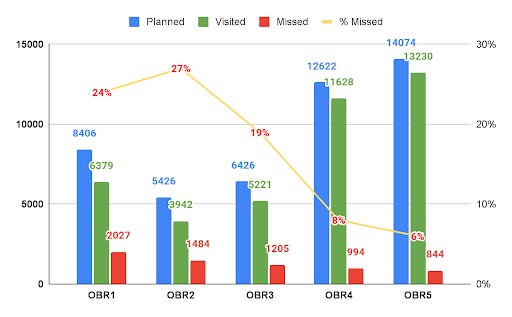
The powerful demo session revealed how PlanFeld saves time, promotes accuracy and boosts vaccination reach across Communities. This was preceded by feedback to the pilot conducted in Kebbi state showing that the percentage of missed settlements dropped from 19% to 8%, and later to 6% of the targeted population. This not just secured the endorsement of key stakeholders but led to calls to further expand its deployment across the country.
It became pertinent to decentralise and expand the deployment of the digital tool across more states especially in Northern Nigeria. With support and backing from the National Primary Healthcare Development Agency (NPHCDA) and National Emergency Operation Center, eHealth Africa team led a comprehensive rollout plan, engaging State stakeholders on the strategies and processes required for effective deployment of the PlanFeld application.
Led by eHealth Africa’s Program Manager on Disease Prevention and Monitoring, Abubakar Shehu, the team engaged State Commissioners of Health, Executive and Permanent Secretaries and key personnel in State Ministries of health. During the engagement across Jigawa, Kaduna, Kano, Katsina, Kebbi, Niger, Sokoto, and Zamfara, Abubakar reiterated that, deployment of PlanFeld for microplanning aligns with eHealth Africa’s vision of reaching underserved communities with healthcare using user-friendly and human-centered tools.
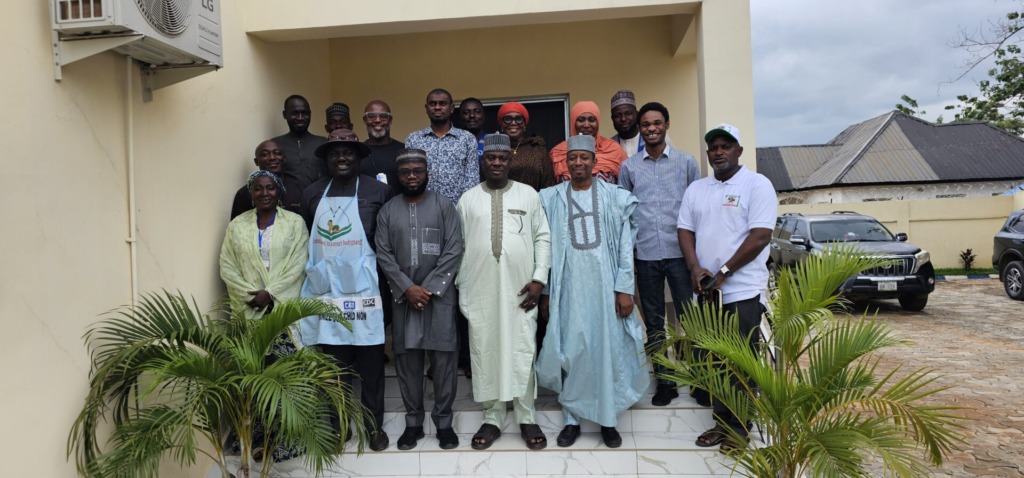
He said, “the success of PlanFeld in Kebbi state Outbreak Response (OBR 4) is a springboard that spurs the organization to further decentralise the engagement to other states especially in northern Nigeria”. Abubakar commended eHealth Africa’s State and LGA coordinators across the implementing states for their continuous commitment towards achieving about 100% Master List of Settlement (MLoS) with accurate geocoordinates despite the enormous huddles.
Having been deployed in the state during the pilot, the then Honourable Commissioner of Health in Kebbi state, Alhaji Yakubu Bala Tafida expressed enthusiasm about the innovation, commending the team for selecting Kebbi State as a pilot location. He also emphasized the importance of leveraging technology and innovation to address public health challenges while encouraging eHealth Africa to continue exploring and deploying solutions that add value to the health system, both at the State and National levels.
The feedback in Sokoto state was similar to that of Kebbi State. The Commissioner of Health, Dr. Faruk Umar Abubakar Wurno, lauded eHealth Africa for leading the drive for the transition from manual to digital microplaning . He said, “the ongoing shift away from manual processes, the introduction of digital solutions such as PlanFeld is both timely and commendable”.
Represented by the ministry’s Permanent Secretary the Commissioner of Health, Niger state said, the laudable efforts will be presented to the Executive governor as he is highly interested in technological advancements which would enhance the state’s health sector as well as other non health interventions. In the words of the Permanent Secretary “I am excited hearing about digitization since the world is going towards that direction, hence my choice of pulling out from a meeting at the government house to receive your team.The future is promising and assured with tools like PlanFeld”.
Beyond endorsement of a novel digital solution that has been tested, important gatekeepers in the public health space have consistently committed to providing an enabling environment to enable digital solutions to thrive. This is evident in the words of the Health Commissioner in Kano state, Dr Abubakar Labaran Yusuf when he said “We are ready to roll out in Kano state so we are expecting our Microplans and Daily Implementation Plans as quickly as possible”.
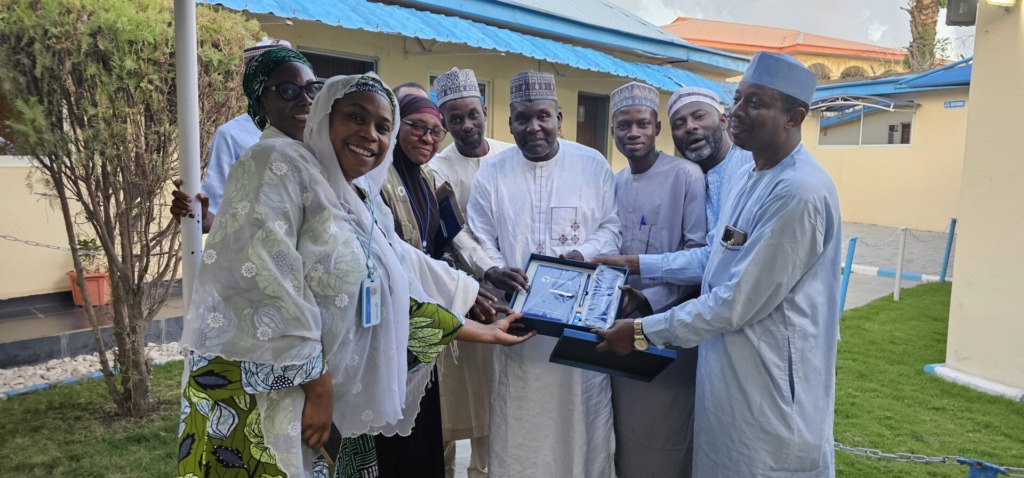
In Katsina state, not just the public health stakeholders support the deployment of digital micro planning tools in their states but security agencies also pledged to continue protecting vaccinators especially in security-compromised locations. The Area Commander of Funtua Assistant Commissioner of Police ACP Musa Hamza Yusufari acknowledged the importance of reaching communities with the right medical supplies irrespective of location. He said, “It is our responsibility to protect everyone within the community; asides that, we are direct beneficiaries of your interventions so we will not relent in providing all the necessary support especially to you and your team”.
During the feedback sessions Director of Partnerships and Programs, Ota Akhigbe, commended the team for their role in ensuring Planfeld became a household name in the digital health space. She said the tool has the potential of achieving a lot even beyond polio campaigns to general routine immunization interventions.
The outcome of these engagements across these 8 states is already visible. The transition to the utilization of digital microplanning for vaccination campaigns has kicked off in earnest. eHealth Africa with support from Gates Foundation and NPHCDA have successfully rolled out PlanFeld for the ongoing vaccination campaign in Jigawa, Kaduna, Kano, Katsina, Kebbi, Niger, Sokoto, and Zamfara.
The early impression is the effective allocation of workload to various vaccination teams based on their target population. This goes a long way in boosting workload optimization thereby ensuring vaccinators and health personnel reach every assigned child without being over stretched. And just as the Commissioner of Health in Kano state said ahead of the roll out, “‘We will be expecting the outcome of digitized Microplans in the coming rounds of campaigns’-Kano state HC of Health”.
Looking forward to 2026, collaboration with the NEOC and NPHCDA strengthened remains critical policymaker buy-in, while early engagement with the State created a strong foundation for adopting and using the digitized microplan. With existing evidence-backed use cases, the scalability of PlanFeld solution increases stakeholder willingness to transition from paper-based to digital microplanning.
As states continue to embrace digital microplanning, PlanFeld is positioned to play an even greater role in strengthening vaccination systems across Nigeria. With growing stakeholder confidence, expanding partnerships, and a clear pathway for scale, the momentum toward a fully digitized, more efficient, and more equitable immunization landscape is stronger than ever.