Mapping the Way to Health Equity: How GIS Ensures No Child is Left Behind

By Joyce Shinyi 

The world  recently commemorated  World GIS Day, a moment that always focuses our attention on the critical role of mapping technology in public health. Here at eHealth Africa (eHA), the conversation is powered by tangible results, specifically those from our successful Geospatial Tracking System (GTS) Initiative. This initiative is built on a clear and essential goal: to ensure that the health services promised to people actually reach them, regardless of where they live.

As our moderator Tijesu Ojumu perfectly framed the context in our recent discussion, “At first glance, when you think about World Polio Day and World GIS Day, they may seem different. But in reality, they are deeply connected by one powerful idea: Health Equity.” This is the human-centered mission the GTS Initiative delivers on.

From Static Maps to Strategic Solutions

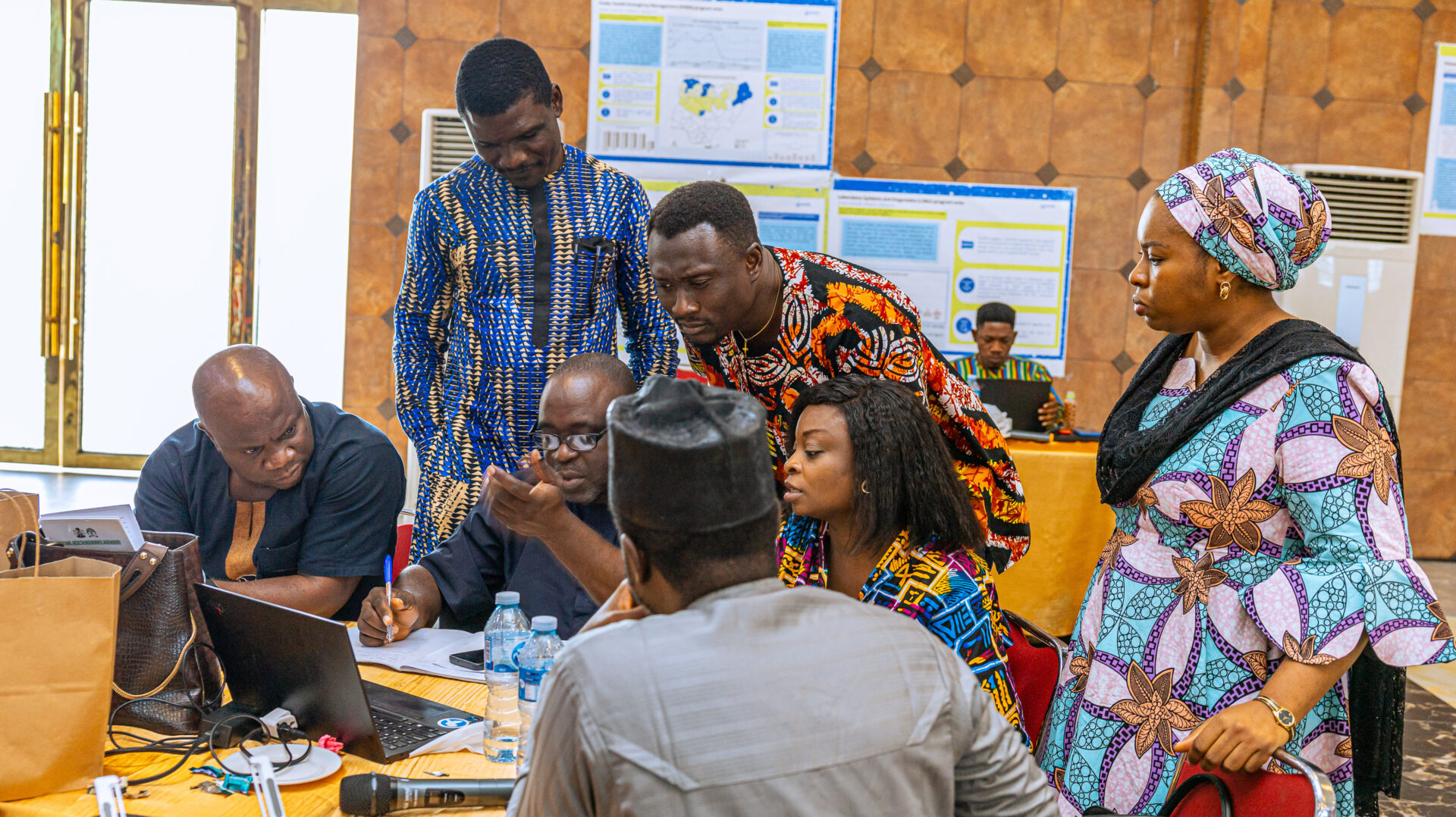
Our Insights webinar, Driving Health Equity with Geospatial Information Systems,” focused on how GIS has evolved from a simple mapping tool into a strategic planning system. Before GTS, health officials often relied on paper-based records and anecdotal reporting, which created large “grey areas” where vaccination coverage was uncertain or falsified, leaving many settlements unvisited for years.

As expert Busayo Fashoto outlined, the system helps us go beyond simply plotting locations by helping us understand “what is there?” and, more importantly, “why is that thing there?” This allows us to make communities visible to the planning systems that often overlook them. Expert Oro-ghene (Oros) Adia further described GIS as a sophisticated relationship tool that builds trust by supplying high-quality data to enhance transparency and accountability in resource allocation. Sa’adatu Ibrahim, Kano State Immunization Officer, summarized the change: “Before GTS, we had difficulties in identifying unvisited areas. After GTS, we could see things crystal clear, these are the areas that still need to be visited“.

The GTS Initiative: Actionable Results in Polio and Beyond

The GTS Initiative provided essential tracking support to the national effort to interrupt circulating vaccine-derived poliovirus type 2 (cVPV2) transmission). Its clear mandate was to improve the geographical coverage of settlements, minimizing the number of missed communities.

Its impact from 2024 to 2025 demonstrates the effectiveness of this targeted approach. Between 2023 and 2025, the initiative contributed to vaccinating over 24.5 million children, while from April to November 2024 it supported activities across 120 Local Government Areas (LGAs), identifying 25,687 previously missed settlements and raising overall coverage from 88% to 90%. Momentum continued into 2025, with GTS tracking spanning 434 LGAs between April and June and achieving a 16% month-over-month coverage increase in June. During the Integrated Measles-Rubella campaign in October 2025, the system further strengthened accountability by recording verified visits in 144,518 settlements—93% of those planned; across 248 LGAs.

Overcoming Challenges and Building Local Capacity

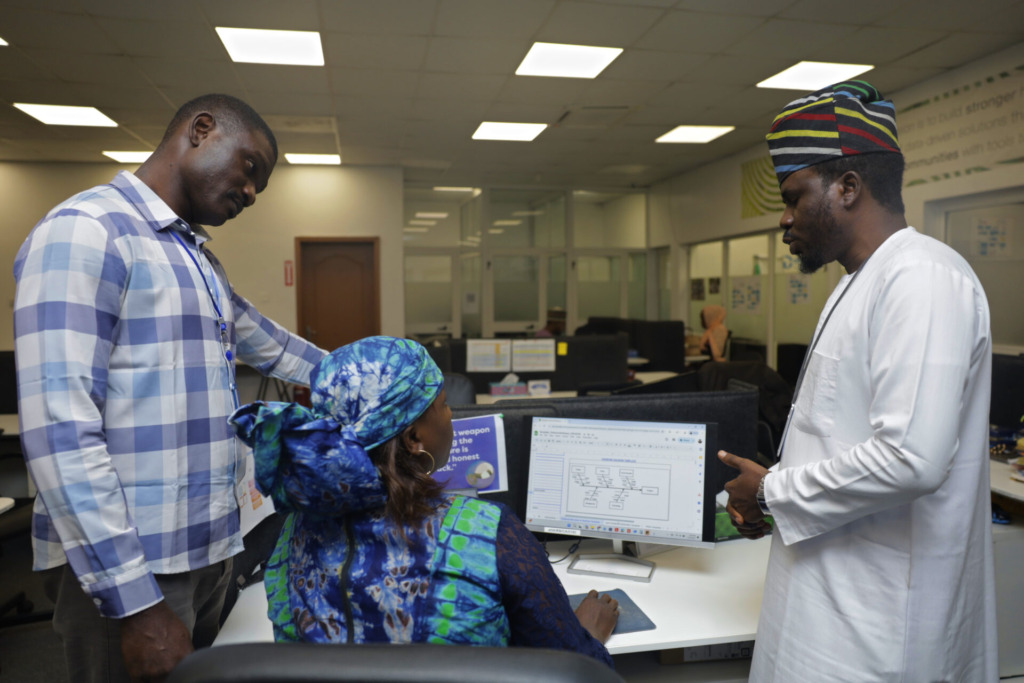
In challenging regions like Northern Nigeria, achieving high coverage means overcoming insecurity, difficult terrain, and chronic network coverage gaps. The GTS Initiative institutionalized smart strategies to manage these constraints: GTS strengthened accountability by enabling real-time digital monitoring, which significantly improved field visibility and supported more responsive decision-making. Continuous validation of the Master List of Settlements (MLoS) ensured that planning data remained accurate, especially in rapidly expanding areas where new settlements can emerge within weeks; this ongoing updating process helped drive coverage improvements across states.

Equally important was the integration of localized expertise—the initiative found that involving local personnel had a positive impact, making the work easier, more accurate, and better aligned with on-the-ground realities. The GTS Initiative underscores a fundamental truth: the successful integration of technology, preparedness , and local capacity are non-negotiable for achieving high-coverage and accountability. For any organization scaling GIS solutions, the enduring lesson is to always start with the use case: the tangible, community-level problem rather than the technology itself.
 Inter-Connecting Digital Solutions and Adolescent Behavioral Change at GDHF 2025

Atef Fawaz

In the coming days, I will be attending the Global Digital Health Forum (GDHF) in Nairobi, Kenya. Exploring the lineup of activities ahead of the global public health event further widened my horizon on the networking and collaborative opportunities up for grabs.  With at least 792 abstract proposals received from over 450 organizations worldwide, the GDHF provides opportunities not just to spotlight key public health issues but to build strong collaborations that scale impact. 

While looking forward to insightful and potentially impactful sessions across various facets of public health, I am fascinated about the interconnectivity of digital health solutions and how it can spur social behavioral change amongst adolescents in Africa.   This is because Africa, as a continent, hosts the youngest population below the age of 18, with over 40% of its population under 15, making it the youngest continent.  UNICEF also corroborated this with its Generation  2030 Africa report, revealing that projections show that by 2050, the continent will account for 42 percent of all global births and almost 40 percent of all children under 18.

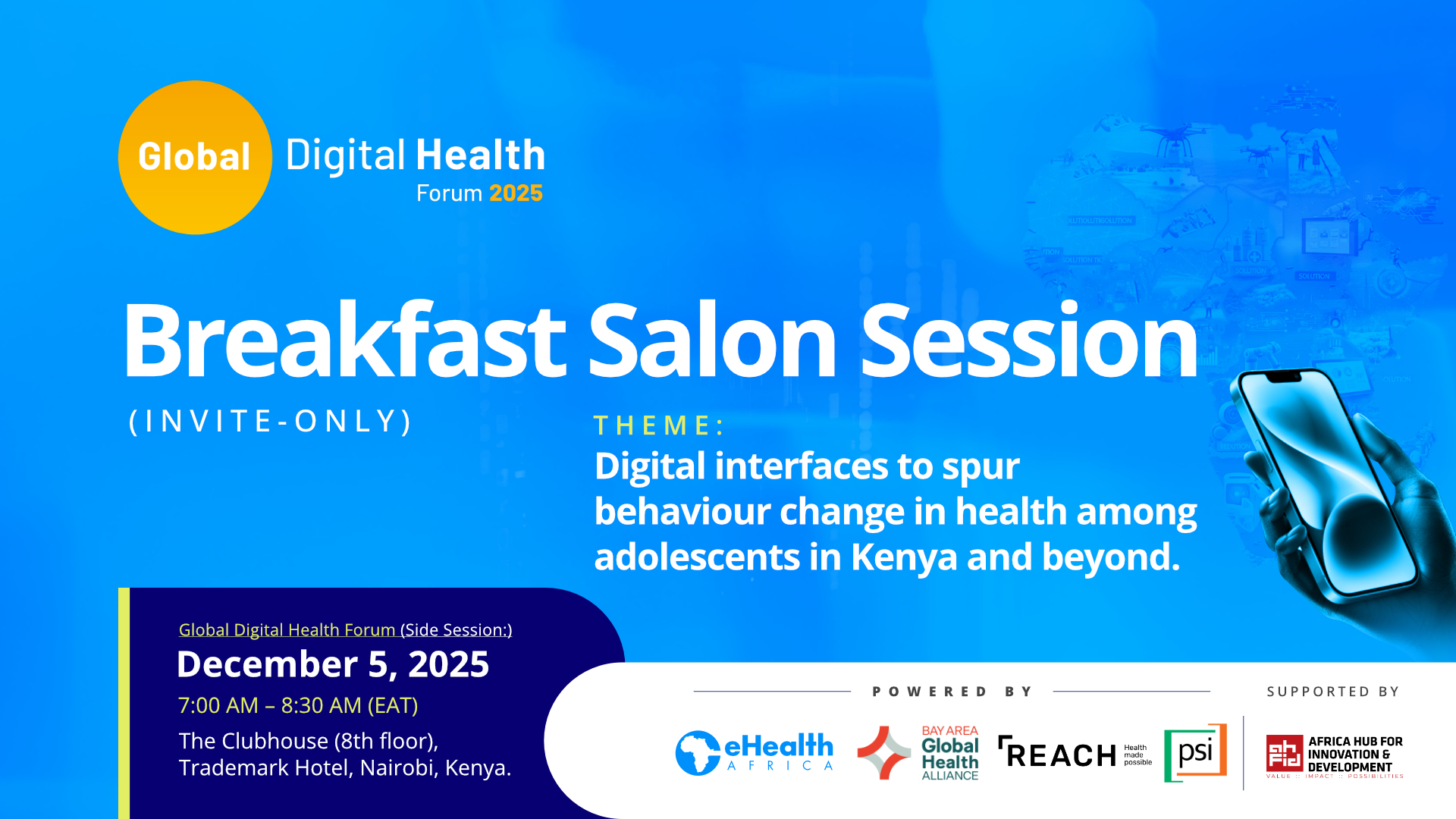
This informs eHealth Africa’s Breakfast Salon Session at the upcoming GDHF titled, “Digital Interfaces That Influence Health Behaviour Among Adolescents in Kenya and Beyond.”  This provides an opportunity to advance conversation and take bold steps on the equitable utilization of digital interfaces for health behavior change and referral to services among underserved communities in Kenya and beyond.  This dynamic session will include a youth-led segment where young people share their views, a live demo of the product from our partners, and an informal fireside chat with leaders in the field.

The conversion will no doubt spur action and behavioral change amongst adolescents. Indeed, it is pertinent to reach these demographics effectively in the right digital spaces. eHealth Africa, for instance, developed a digital tool based on the World Health Organization’s Checklists to Assess Vulnerabilities in health care facilities in the context of climate change.  The tool, Climate Health Vulnerability Assessment Tool (CHAT), is currently being used to assess and strengthen the climate resilience of healthcare facilities in Nigeria. Beyond converting over a 100-page document to a simple mobile user-friendly application, the CHAT tool is critical to helping PHCs to be resilient to climate change realities.  

This integration is currently being implemented by eHealth Africa across 238 PHCs in Nigeria with the potential to further scale. The idea of solarizing primary healthcare facilities not only promotes health equity and Universal Health Coverage. This is also among the urgent actions being taken to combat climate change and its impact, which directly addresses Sustainable Development Goal 13.  This is no doubt an interconnectivity that cannot be underestimated.

Similarly, the digitization of micro-planning for vaccination campaigns using digital innovation is also spurring behavioural change amongst public health personnel in Nigeria. Using PlanFeld; a web-based application designed to support field logistics for public health interventions, more children are reached with vaccines and other medical supplies.

I will no doubt be looking forward to eHealth Africa’s abstract presentations especially on how the interface of digital tools like CHAT and PlanFeld are spurring behavioral change and promoting health equity.  Also,  I am excited about the prospect of engaging with like-minded partners to explore ways of scaling these multifaceted solutions for the benefit of underserved populations. 

As the world prepares for the Global Digital Health Forum (GDHF) 2025, the future of global health depends not only on smart technologies but also on resilient systems capable of withstanding a rapidly changing climate. In this vein, the world cannot afford digital systems that fail when storms hit or power grids collapse. Neither can we build resilient health systems without leveraging the transformative power of digital innovation. The intersection of these agendas is where the most transformative impact lies.

As one of the few organizations leading the implementation of interventions that combine digital innovation, renewable energy, and climate-resilient strategies, eHealth Africa is developing human-centered solutions that advance health equity, integrate renewable energy into public health systems, and reduce vulnerability to climate change. Our participation in the upcoming GDHF 2025, therefore, reflects a strong demonstration of our institutional capacity, technical expertise, and commitment to driving transformative impact across multiple areas of public healthcare on the continent.

Atef Fawaz is the Executive Director of eHealth Africa. He is a Complex Operations Management and ICT expert with experience in Humanitarian Response and Digital Health

eHealth Africa Chats Pathway to Resilient Health Systems at GDHF 2025

Azeez- Ayodele Fatimah Ayotemitide

Across many low- and middle-income countries (LMICs), health systems face a confluence of systemic challenges. They are constantly shifting under the weight of policy instability, significant financing gaps, pervasive infrastructural deficits, and complex social pressures. In these contexts, resilience is not a luxury. It is the only way a system survives.

Resilience means designing systems built rooted in local ownership – not just to function today – but to endure and thrive amid uncertainty. These are systems that remain operational despite shrinking budgets, shifting priorities, or leadership transitions; that welcome innovation as fuel rather than falter under its weight; and that become more robust, adaptive, and impactful the more they are used.

The realities facing health systems in LMICs are not theoretical. They show up in efficient ways: Health facilities without stable power, critical services dependent on paper-based systems, data scattered across siloed platforms, staff turnover that erases institutional memory, digital tools that falter the moment donor funding ends, solutions designed for reporting – not for people, and infrastructure that cannot withstand policy changes or economic pressures.

When these weak points collide, the result is predictable: progress stalls, innovation slows, and entire communities feel the impact. This is why resilience matters. A resilient system can survive these pressures and continue delivering care consistently, reliably, and equitably.

Why the GDHF 2025 Theme Matters

As the global digital health community prepares for the 2025 Global Digital Health Forum (GDHF), the theme, “Advancing Digital Health Solutions in Low- and Middle-Income Countries”,  places resilience where it belongs: at the center of the conversation.

Digital health has enormous potential across LMICs, but only when the systems beneath it are strong. For instance, without stable power, reliable data, or community-level visibility, even the most advanced tools struggle to take root.

The GDHF is one of the few spaces where these realities are openly acknowledged, and LMIC voices shape the global conversation. The 2025 theme pushes us to think beyond innovation as a standalone objective and instead, focus on the environments where innovation must live.

As the executive director, Atef Fawaaz puts it, “Digital health only succeeds when the foundations beneath it are strong. GDHF gives us a space to show that resilience isn’t an abstract idea. It’s the power, data, and community structures we build every day to keep health systems moving.”

eHealth Africa’s work spans the interconnected layers of digital health. It goes beyond applications and dashboards to the foundations that make them viable: integrated data platforms, reliable operational systems, sustainable power for clinics, tools that empower health workers, and community-centered support structures. 

Together, they form the backbone of self-reliant health systems that don’t wait for permission, funding cycles, or external validation to deliver.  At GDHF 2025, eHealth Africa joins national ministries, African innovators, and committed global partners to contribute to this vision and help shape the future of digital health – led from within and built to last.

This year, eHealth Africa will co-host a private side session with Bay Area Global Health Alliance, REACH, and the Africa Hub for Innovation & Development, focusing on “Digital interfaces that influence health behaviour among adolescents in Kenya and beyond”.

The session will explore how youth-centered tools, including AI-powered avatars and digital personas, can strengthen engagement and improve health outcomes. It reflects the kind of collaboration required to build systems that evolve, respond, and improve over time.

Similarly, eHA will be spotlighting three impactful interventions/ solutions while exploring opportunities to build collaborations and strengthen partnerships to scale the impact of these interventions.

Solarization: Powering Reliability

Stable power is the backbone of digital health. Without it, cold-chain equipment fails, data cannot be entered or accessed, and facilities cannot deliver consistent service. eHealth Africa’s Solarization intervention provides sustainable energy to primary health centers, ensuring digital tools remain functional and essential services continue uninterrupted. 

This intervention is a practical demonstration of resilience in action. So far, we have achieved 50+ self-powered PHCs toward a target of 238, simultaneously saving facilities over 2.5 million naira in fuel and maintenance costs. Scaling this impact is critical, as every self-powered facility represents a secure anchor for digital health, bringing consistent, life-saving care to underserved communities and reinforcing a scalable, transformative model of system durability.

PlanFeld: Turning Data Into Action

Resilient health systems require real-time visibility. Planfeld enables operational teams to track field activities, manage logistics, coordinate emergency response, and make informed decisions using live data. 

A key highlight of its impact was in Kebbi State, where the tool was instrumental in developing 225 Ward-level Digitized Micro Plans for 21 Local Government Areas (LGAs), equipping over 2,950 teams with precise implementation schedules. Due to this success in strengthening planning and data utilization, the state government of Lagos subsequently invited eHealth Africa to deploy PlanFeld for microplanning across their system as well. It strengthens a system’s ability to adapt – one of the core functions of resilience.

CHAT: Community-Level Strength

This tool is integral to our work in climate adaptation. It was successfully piloted across 3 states and 30 Primary Health Centers (PHCs) in Nigeria. Building on this success, the next phase involves direct integration with DHIS2 and the addition of critical hazard areas, such as Heatwaves and Drought, into the assessment framework. By embedding comprehensive, data-driven routines and critical climate intelligence at the community level, CHAT ensures that system resilience is not merely confined to central planning or infrastructure, but is robustly supported by last-mile visibility and human capacity.

Collaboration in Focus: eHealth Africa at GDHF 2025

As eHealth Africa heads to GDHF 2025, the focus is not merely on presenting tools, but on advancing a conversation that matters.  Importantly, we are out to take on bold conversations on how to build health systems that continue functioning and continue improving, no matter what challenges arise.

Resilience is not built in a day. It is built through intentional design, strong infrastructure, meaningful partnerships, and solutions that communities can trust and sustain. At GDHF 2025, eHealth Africa joins national ministries, African innovators, and committed global partners to contribute to this vision and help shape the future of digital health – led from within and built to last.

Evidence for the Future: SARMAAN II and the Pursuit of Safer Child Health Interventions

By Joyce Shinyi

Progress in public health rarely arrives as a single headline. It often builds through design, proper execution, and a commitment to evidence. SARMAAN II represents that kind of progress. The study, formally known as Safety and Antimicrobial Resistance of Mass Administration of Azithromycin in Children 1–59 months in Nigeria, advances the work initiated under SARMAAN I, which focused on children 1–11 months. While Phase I demonstrated large-scale delivery across some states, Phase II is designed to understand what that intervention means in terms of safety, antimicrobial resistance, and long-term use of azithromycin for young children.

This evolution is important as global discourse continues around the role of antibiotics in child survival. Questions persist around benefit, risk, feasibility, and equity. SARMAAN II positions Nigeria to contribute clarity using data generated within Nigerian communities. SARMAAN II is being implemented across eleven northern Nigerian states: Sokoto, Kano, Katsina, Kebbi, Kaduna, Jigawa, Bauchi, Adamawa, Gombe, Yobe, and Zamfara. The geographic spread strengthens the ability to produce evidence across varied population and health system contexts. 

The programme is led by the Nigerian Institute of Medical Research (NIMR), supported by a broad group of implementing and technical partners including the Federal and State Ministries of Health, the Nigeria Centre for Disease Control, the National Primary Health Care Development Agency, the World Health Organization, UNICEF, Sightsavers, Malaria Consortium, and eHealth Africa. Funding support is provided through consortium partners by the Gates Foundation. Each institution plays a defined role grounded in expertise, operational capacity, or scientific leadership.

eHealth Africa’s role

At eHealth Africa, our responsibility in SARMAAN II is straightforward: to build and maintain the digital and data systems that support accurate, timely, and trustworthy evidence. This includes digitised reporting tools, secure data infrastructure, structured training, and continuous field support to uphold data quality at every stage. Our work sits at the intersection of research and communities. Digital systems only work when the people behind them are trained, supported, and equipped to use them confidently. That combination of technology, supervision, and practical field discipline is what sustains data integrity throughout the study process.

As Darlington Okoye, SARMAAN Project Manager at eHealth Africa, explains; “With eHealth Africa involved, we digitised most of the case-report forms and built systems that ensure data remains clean at the point of collection. Digitisation has reduced lag time and strengthened real-time verification. Over time, we have also seen a clear improvement in the capacity of our research assistants as they continue to work with digital tools in the field.” These adjustments reinforce the precision required for credible scientific outputs.

Why SARMAAN II matters

Many programmes measure success in scale. SARMAAN II prioritises certainty. Certainty that interventions administered at population level are safe. Certainty that antimicrobial resistance risks are measured, not assumed. Certainty that policy decisions reflect Nigerian data and Nigerian experience. The significance of this work will be reflected not in speed, but in the quality of conclusions that can inform long-term child health policy.

The programme will continue strengthening digital processes, building field capacity, and multi-stakeholder coordination as implementation continues across  states. The objective extends beyond data capture to building durable systems, capability, and evidence that support informed decision-making in Nigeria’s health sector.

How eHealth Africa’s Lean Transformation Is Strengthening Collaboration and Impact

Moshood Isah 

Low- and middle-income countries (LMICs) are already bracing for a steady decline in donor contributions from across the world. At the same time, as health systems grow increasingly vulnerable to the impacts of climate change and other public health challenges, expectations remain high, making a culture of efficiency more essential than ever.

Beyond the external challenge of shrinking donor funds, organizations , particularly community-based ones, continue to battle bureaucratic inefficiencies and duplication of interventions. Duplication of efforts across development projects often results from poor donor coordination in LMICs that receive development assistance. This leads to a loss of agility and responsiveness, with potential delays in overall deliverables.

In an era that calls for the acceleration of local innovation, especially in digital health and public health interventions, every resource must be used judiciously to achieve optimal impact. In response, organizations are taking intentional steps to implement Lean Management and human-centered approaches in their work. Lean Management is a continuous improvement philosophy that focuses on maximizing value, minimizing waste, and empowering teams to work more efficiently and effectively.

One of the organizations leading this charge is eHealth Africa (eHA). A few months ago, the Executive Director, Atef Fawaz, initiated an internal drive to promote a culture of Lean Management across the organization  and by extension, in its engagements with key partners.  This was preceded by comprehensive strategic training of managers and senior managers on the critical tenets of Lean management approach to Non-Profits. 

According to Atef, adopting a lean mindset is not only about maximizing output by eliminating waste of time and resources but also about ensuring that communities remain at the center of decision-making. He said, “Lean helps us stay grounded in what communities are telling us, not what we think we know.” Considering all eHealth Africa’s digital health solutions are human-centered, Atef reiterated that,  “feedback from communities remains key,  even as Lean supports consistent knowledge sharing and capacity building.” This, according to him, helps build the sustainability our work thrives on.

With clear results to show for it, this cultural shift at eHealth Africa has continued to strengthen trust and credibility among donors and partners. “We have always prided ourselves on transparency and accountability,” Atef adds. “This has endeared us to more donors globally, and integrating Lean principles further into our work can only make it stronger.”

To sustain this shift, eHealth Africa has deployed a series of internal communications and engagement strategies to enlighten its teams on the principles of Lean Management, from identifying waste and reducing duplication to ensuring that public health interventions are delivered efficiently, with communities in mind.

Equally important, top managers and directors are embracing the Gemba Walk;  a Lean practice where leaders step out of their offices and go to “the real place” where value is created. This includes project sites, data centers, or field locations. These visits give team members the opportunity to share experiences openly, helping leaders understand challenges and areas for improvement.

In addition, eHealth Africa has integrated smart working tools like Asana to enhance efficiency and transparency. The use of Asana has made project delivery more measurable, collaborative, and accountable.

According to Dena Lu, Chief of Staff to the Executive Director and eHA’s Asana Champion, Asana helps embody the Lean mindset of continuous improvement by keeping every task visible, organized, and aligned with our strategic goals. “It eliminates confusion, reduces time spent chasing updates, and allows me to quickly identify what can be improved in our workflows.”, She said.  With Asana, Dena is able to track progress in real time, streamline communication across teams, and ensure that every action contributes to greater impact.

Corroborating this, Solomon Emmanuel from the Information Communications and Technology (ICT) Help Desk notes that the user-friendly platform has become the backbone of transparency and accountability within the ICT team, bringing all our operational, technical, and administrative activities into one unified platform.  “It gives me clear visibility into what needs to be done, who is responsible, and the current stage of each task; effectively breaking down silos and improving coordination across the team.”, he said 

For Tope Ogunseye-Falodun, who leads the Project Support Unit, Asana has brought new order to teamwork. “Automated reminders prevent missed tasks, shared project spaces reduce duplication, and clearer timelines keep everyone aligned.”, she added 

Overall, tools like Asana, alongside other Lean-inspired strategies like the  launch of the Meeting Optimization to minimize unproductive meetings and protect deep work, have helped translate eHealth Africa’s strategic objectives into structured, visual workflows where accountability and improvement happen naturally. As Fozia Malik, Deputy Director, People & Organizational Strategy, explains; “It’s easier to spot what can be refined before it slows us down, a true reflection of Lean’s focus on flow.”

The results are visible and tangle with project alignment to strategic goals increasing to 86% from 81% in September and continued success in reducing No-Cost Extensions (NCEs) across all quarters of 2025 compared to 2024, maintaining the  25% overall reduction rate. Also, eHealth Africa’s latest innovations like  Climate Health Vulnerability Assessment Tool (CHAT) and other upcoming innovations were consistently reviewed and refined based on feedback from users in the communities we serve.

As eHealth Africa continues to strengthen its operational culture through Lean Management and human-centered design, the organization is setting a new standard for efficiency, accountability, and community-driven impact in global health. By embedding continuous improvement into everyday workflows, empowering teams with the right tools, and listening closely to the voices of the communities it serves, eHealth Africa is not only optimizing how it works but also reshaping how impact is sustained.