Reports
Designing Fundable Health Systems in Fragile Contexts: What Actually Works for Scale and Investment
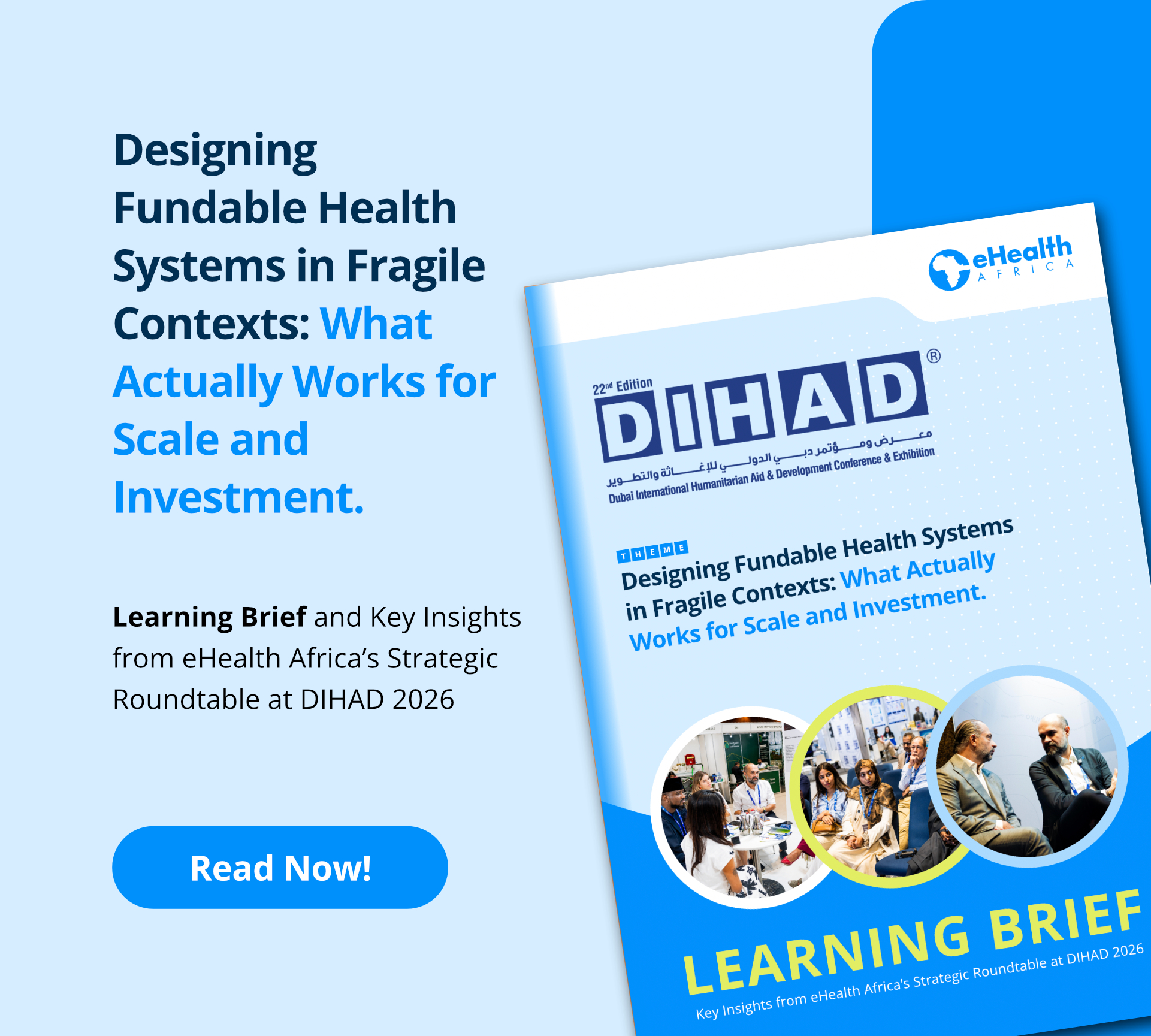
What makes a health intervention not only successful, but fundable, scalable, locally owned, and sustainable beyond its initial funding cycle?
At DIHAD 2026, eHealth Africa convened leaders from implementation, development finance, humanitarian action, academia, health technology, and frontline healthcare delivery to examine this question.
This Learning Brief captures key insights from the discussion, exploring the importance of local ownership, sustainable financing, operational capacity, decision-grade evidence, technology life-cycle planning, and long-term implementation thinking.
The discussion brought together perspectives from eHealth Africa, EHA Clinics, OECD, Lebanese Red Cross, Siemens Healthineers, and the Global Health Institute at the American University of Beirut.
At the heart of the brief is a simple proposition: sustainability cannot be added at the end of an intervention; it must be designed from the beginning.