June 11, 2026
Building Talent and Careers in eHealth Africa
Across Africa, organisations are competing for skilled talent, but attracting talent is only half the challenge. Retaining and developing that talent is often where organisations struggle. In public health, the consequences extend beyond the workplace. When experienced professionals leave, programmes lose continuity, institutional knowledge disappears, and the communities those programmes serve can feel the impact.
As recently as 2022, only 21% of nonprofits had a formal retention strategy in place. The result is a familiar cycle: organisations invest heavily in recruiting talent only to lose employees to environments that offer clearer opportunities for growth.
For organisations working to strengthen health systems, this challenge is particularly significant. Sustainable impact depends not only on funding, technology, or partnerships, but also on the people responsible for delivering programmes, supporting governments, coordinating stakeholders, and ensuring operational excellence.
At eHealth Africa (eHA), talent development is viewed as a strategic investment. Rather than waiting for employees to leave before responding, the organisation has intentionally created pathways for growth through cross-functional mobility, structured performance management, leadership development, managerial accountability, and a workplace culture that encourages continuous learning.
Few stories illustrate this approach better than Dena Lu’s career journey at eHealth Africa.
Dena joined the organisation in 2017 as a coordinator in the operations department after leaving a career in Nigeria’s oil and gas sector, which she felt did not align with her passion or sense of purpose. What began as a career transition soon became a journey of continuous growth and leadership development.

Over the years, Dena took on increasingly complex responsibilities across the organisation. She served as Senior Operations Manager at EHA Clinics, supporting the organisation’s expansion efforts, before moving into Programme Delivery as Project Support Unit (PSU) Manager. Today, she serves as Chief of Staff within eHealth Africa’s Executive Management team.
Her progression reflects more than individual career advancement. It demonstrates how investing in internal talent helps organisations retain institutional knowledge, strengthen leadership capacity, and improve operational effectiveness.
During her tenure as PSU Manager, Dena led several initiatives that strengthened organisational systems and improved how teams worked across eHealth Africa. She spearheaded the establishment of standard operating procedures for both the Project Support Unit and Knowledge Management functions, helping create greater consistency and accountability across project management processes.
She also played a key role in strengthening governance and compliance practices across teams. Under her leadership, the PSU evolved from being viewed primarily as a logistical support function to becoming a strategic partner that promoted project quality, compliance, and continuous improvement across the organisation.
Recognising the need for stronger project visibility and coordination, Dena championed improvements to the organisation’s use of Asana. Through platform automation enhancements, refresher trainings, and the promotion of internal Asana champions, she helped increase adoption across teams and improve task monitoring and collaboration.
Her team also introduced more effective performance indicators to track success and strengthened project documentation practices through the creation of monitoring tools that enabled teams to quickly identify missing project management documents and access key project resources. These improvements enhanced oversight, increased efficiency, and boosted confidence among teams supporting projects across the organisation.
The impact of these efforts extended beyond processes. Through successful coordination of high-profile initiatives, improved stakeholder engagement, and stronger cross-directorate collaboration, the PSU earned recognition from senior leadership and colleagues across the organisation for its contribution to operational excellence.
For Dena, however, growth was never solely about promotions or professional achievements.
“Everything I’ve achieved in my career today is because of eHealth Africa,” she says. “Each step of that journey was made possible because eHA recognises potential and provides growth opportunities. When you work hard, stay honest, and are intentional about what you do, people notice and support you.”
Equally important was a culture that viewed learning as part of growth.
“I’m not perfect; I’ve made mistakes along the way, but this organisation gives room to learn, to improve, and to make things right.”
Beyond professional development, Dena found something equally valuable: a sense of belonging.
“What has truly kept me at eHealth Africa all these years is the people and the culture,” she explains. “Working with people and being part of a community has always been something that truly fulfils me.”
She points to the relationships built through team activities, informal interactions, and shared experiences as an important part of what makes the workplace unique.
“It’s not just all about work,” she adds. “We strike a great balance. We are serious when it’s time to work, but we also make sure to enjoy ourselves when it’s time to relax.”
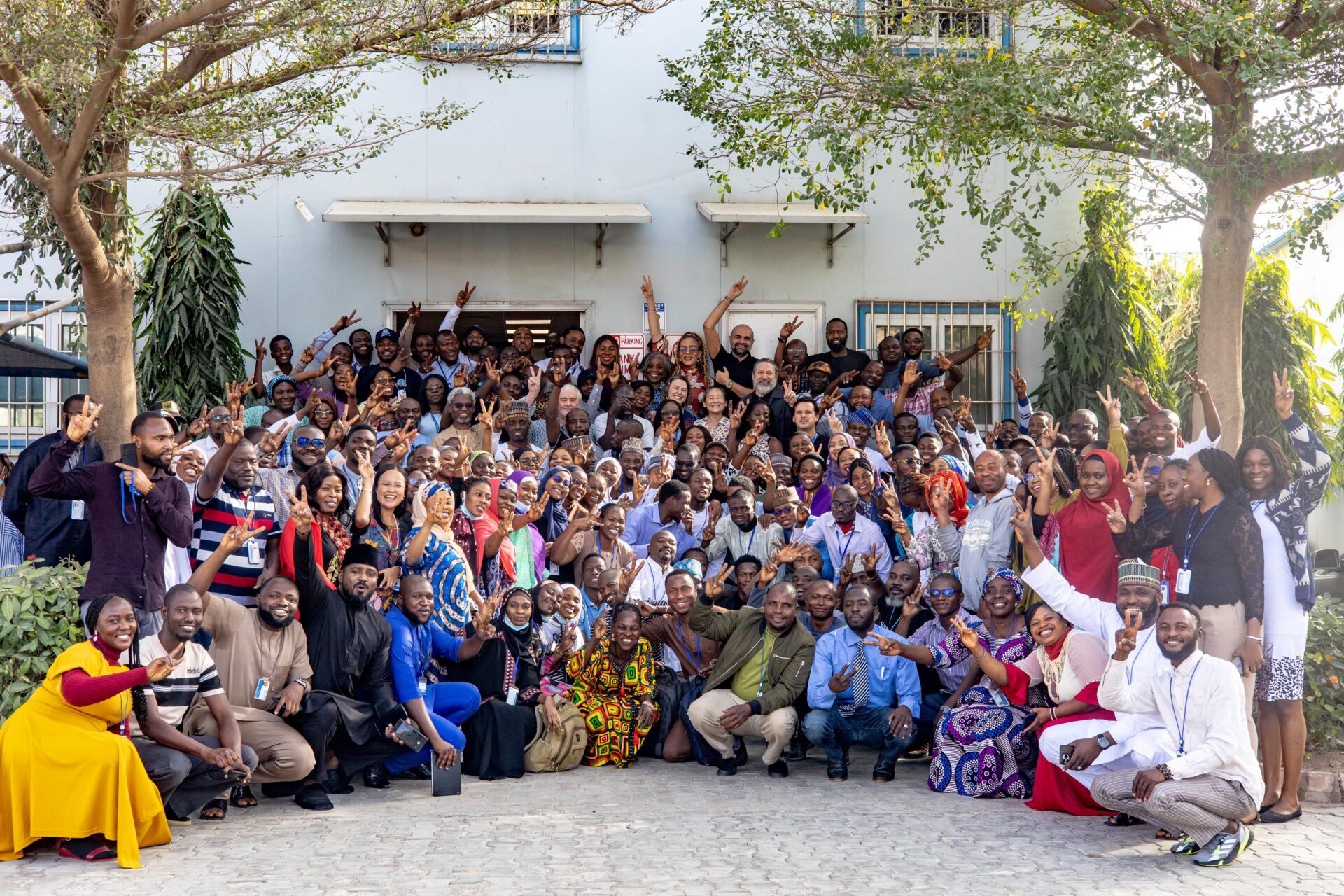
This culture of growth and belonging has earned recognition beyond the organisation itself. For four consecutive years, eHealth Africa has been certified as one of the Best Places to Work, receiving particularly strong ratings in learning and development, talent strategy, and career growth.
The certification is based on a rigorous methodology that includes independent HR audits and employee surveys, reflecting measurable employee experiences and workplace practices.
Executive Director Atef Fawaz attributes the recognition to a deliberate organisational commitment.
“Being recertified as one of the best places to work is not a mere coincidence but a reflection of our consistent intentionality in creating a workspace that inspires people to make a meaningful impact across communities.”
For eHealth Africa, investing in talent is not separate from its mission of strengthening health systems and improving outcomes for underserved communities. The two are deeply connected.
Employees who grow in capability and confidence are better equipped to strengthen governance systems, improve programme delivery, support government partners, coordinate complex initiatives, and respond effectively to emerging challenges. In turn, stronger teams create stronger institutions, and stronger institutions are better positioned to deliver lasting impact.
As organisations across Africa grapple with talent retention and workforce development challenges, the question is no longer simply what they are building in communities, but also what they are building in their people.
Strong health systems depend on strong institutions, and strong institutions depend on people who are given opportunities to grow. By investing in talent development, career mobility, and supportive workplace cultures, eHealth Africa is not only building careers; it is strengthening the capacity required to improve lives and advance public health outcomes across Africa.