Case Studies
Improving Vaccine Access in Insecure Settings: Lessons from Indigo Deployment in Borno State

Ensuring equitable vaccine access in fragile and conflict-affected settings remains one of the most persistent challenges in global health. In many underserved communities, vaccine availability is constrained not only by geography and insecurity but also by limitations in the cold chain infrastructure required to maintain vaccine potency during storage and transport (Gavi, 2019).
In northeastern Nigeria, Borno State presents a particularly complex operating environment. Security constraints, poor transportation networks, population displacement, and limited infrastructure have historically restricted routine immunization services in many communities (Dunn et al, 2018). Although hundreds of health facilities provide routine immunization services across the state, a significant number continue to operate without functional cold chain equipment, limiting their ability to safely store and administer vaccines.
As an implementation partner supporting public health initiatives, eHealth Africa facilitated the deployment of the Indigo Vaccine Carrier System to address these exact challenges. This article explores how adaptive vaccine cold chain innovation improved immunization access in underserved and insecure communities.
The Limitations of Traditional Cold Chains
Prior to the Indigo deployment, vaccinators from facilities without refrigeration frequently traveled long distances to collect vaccines from apex cold chain facilities equipped with cold chain equipment. Due to the limited holdover capacity of conventional ice-based vaccine carriers, unused vaccine doses have to be returned the same day to avoid spoilage.
These operational constraints had severe downstream effects:
- Reduced Session Frequency: Facilities were typically restricted to conducting vaccinations only one day each per week of fixed and outreach sessions (eight days of immunization per month).
- Limited Outreach: The need to return vaccines by the end of the day restricted how far health workers could travel into remote or insecure areas.
- High Transport Costs: Daily travel to collect and return vaccines consumed significant financial resources that could have been spent on service delivery.
- Missed Opportunities: Caregivers arriving on non-immunization days were turned away, leading to missed opportunities and a loss of community trust.
The Indigo Intervention
To address these challenges, the Indigo Vaccine Carrier system was progressively deployed beginning in 2020 to support health facilities lacking functional cold chain equipment (CCE) systems. The deployment expanded from 6 facilities in 2020 to supporting an average of 32 facilities across 7 Local Government Areas (LGAs) in Borno State by 2024. These LGAs included Biu, Bayo, Hawul, Kwaya Kusar, Askira Uba, Chibok, and Konduga.
The Indigo system represented more than a logistical innovation. It introduced an adaptive operational approach for sustaining immunization services in hard-to-reach environments where conventional cold chain systems were difficult to maintain consistently. The system provides reliable, 5 day holdover cold storage without the need for daily ice replenishment once charged, fundamentally changing the operational dynamics of field vaccination.
Operational and Cost Efficiencies
The impact of this technological intervention on operational efficiency was profound. By eliminating the need for daily vaccine transport, the Indigo system allowed facilities to conduct daily routine immunization sessions for 5 consecutive days.
The cost efficiencies achieved were striking. In 2024, the annual transport cost for facilities using the traditional ice-based system was estimated at $3,209 USD. With the Indigo system, this cost was reduced to $1,502 USD, a massive 53% reduction in cold chain transport costs.
More importantly, this logistical efficiency translated directly into improved health outcomes. In 2024, the facilities utilizing the Indigo system reached 130,661 children, achieving 112% of their immunization target (116,584). By extending the holdover time, health workers were able to travel further into remote areas, extending the reach of outreach programs and ensuring that children in previously inaccessible settlements received life-saving vaccines.
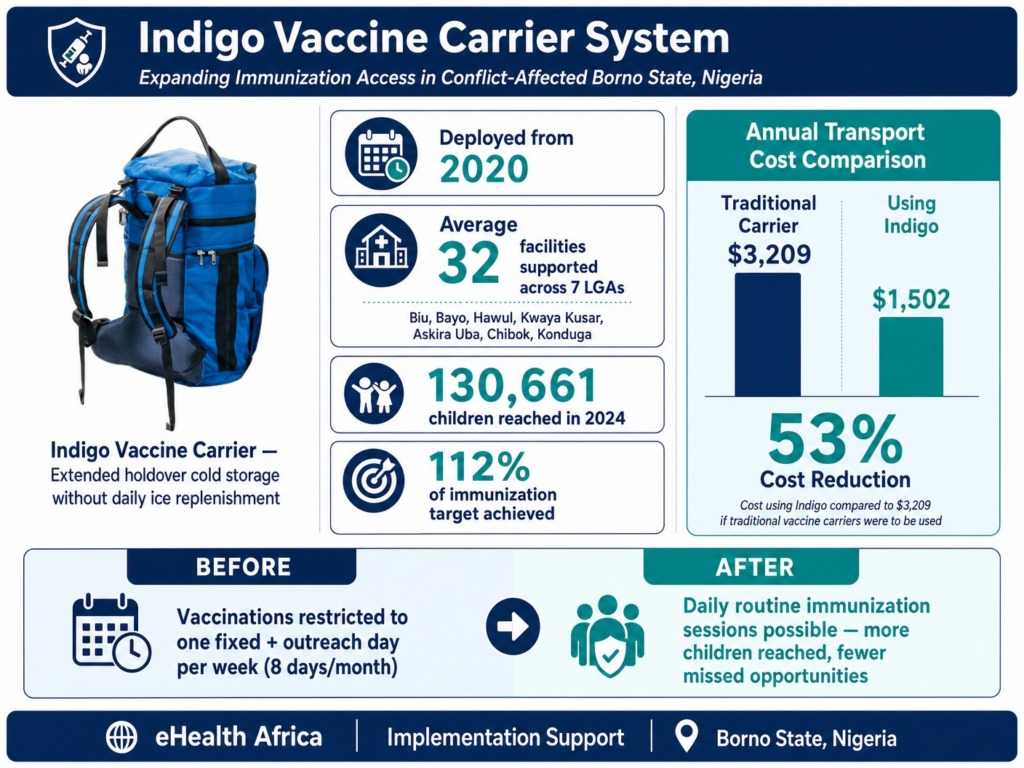
Figure 1: The transformation of immunization access in Borno State following the deployment of the Indigo Vaccine Carrier System.
Adapting to Fragile Settings
Deploying health technology in fragile and conflict-affected settings requires specific operational adaptations (Blanchet et al., 2017). The Indigo deployment in Borno State succeeded because it was tailored to the realities of the environment:
- Rotating Deployment Strategy: Rather than attempting to install permanent, vulnerable infrastructure in highly insecure areas, the portable nature of the Indigo carriers allowed for flexible, rotating deployment. Facilities were transitioned off the Indigo system once they received a permanent Solar Direct Drive (SDD) refrigerator.
- Decentralized Capacity: The deployment was accompanied by rigorous training for local health workers, ensuring they could operate and maintain the carriers without relying on centralized technical support teams whose access might be restricted by security incidents.
- Last-Mile Focus: The intervention specifically targeted the “last mile” of the cold chain, the critical gap between the apex facilities and the remote community, which is often the most vulnerable link in conflict settings (Ashok et al., 2017)
Conclusion
The deployment of the Indigo Vaccine Carrier System in Borno State demonstrates that technological innovation, when properly adapted to local operational realities, can overcome severe infrastructural and security barriers.
For implementation partners and global health policymakers, the lesson is clear: improving vaccine access in fragile settings requires moving beyond traditional, rigid infrastructural models. By investing in adaptive, portable cold chain solutions, we can ensure that geography and insecurity no longer dictate a child’s access to life-saving immunizations.
References
- Gavi, the Vaccine Alliance. (2019). Cold chain equipment optimization platform. Geneva: Gavi.
- Dunn, G., et al. (2018). The impact of conflict on immunization coverage in 16 countries. Tropical Medicine & International Health, 23(1), 101-110.
- Blanchet, K., et al. (2017). Evidence on public health interventions in humanitarian crises. The Lancet, 390(10109), 2287-2296.
- Ashok, A., et al. (2017). The role of vaccine supply chain in improving immunization coverage. Vaccine, 35(17), 2217-2223.