Press Release
GDHF 2025 : eHealth Africa, Partners Call for Sustainable Financing, Collaborative Innovation for Promote Adolescent Behavioral Change
For Immediate Release
[ABUJA – Nigeria] December 15th, 2025

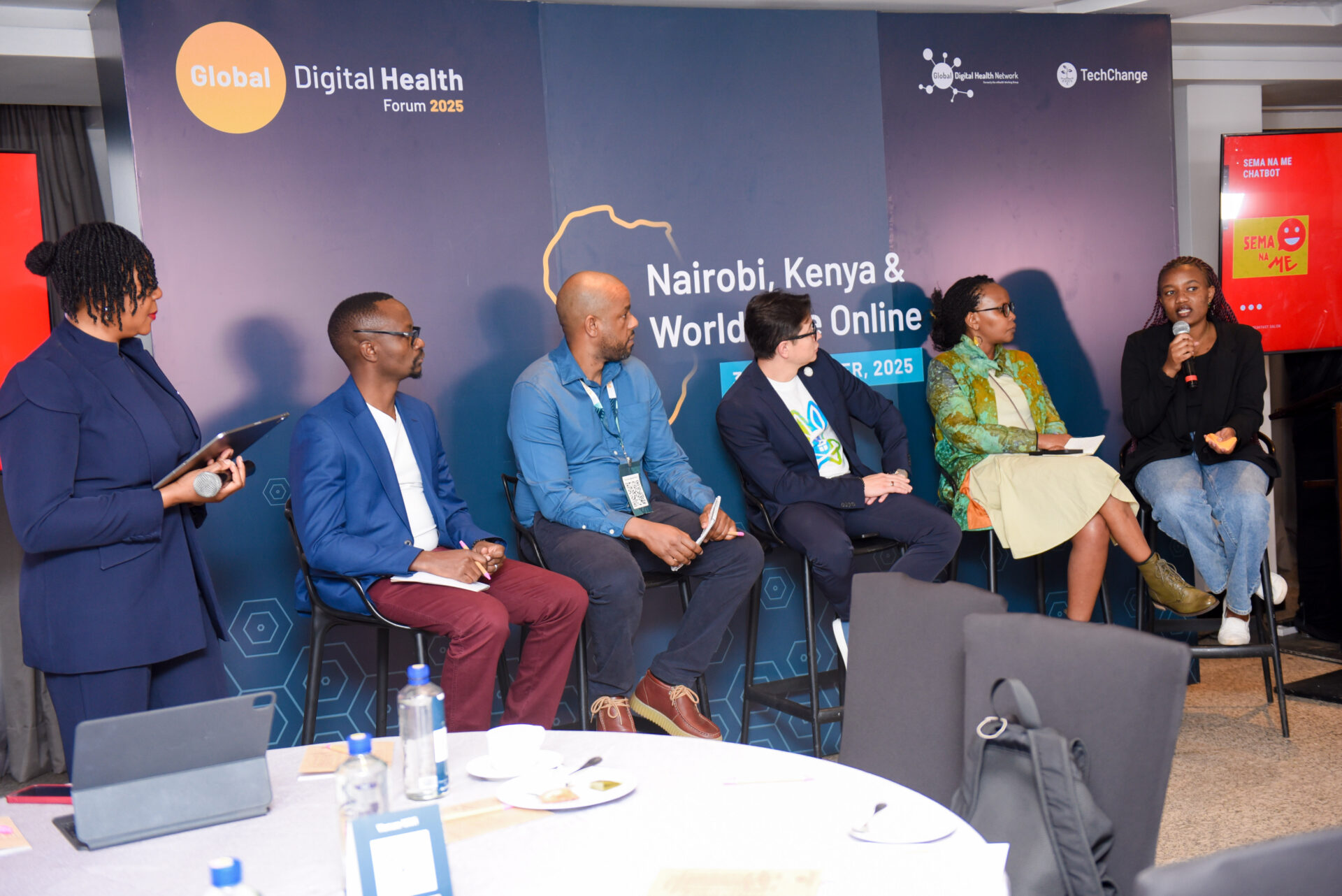
eHealth Africa along with leaders in digital health, youth innovators, and technical experts have called for a systemic sustainable financing and collaborations in addressing health challenges, correct misinformation, and empower adolescents to make healthier decisions independently. This important call was made at the Global Digital Health Forum (GDHF) in Kenya, during a Salon Session hosted by eHealth Africa with Population Services International, Reach Digital Health, the Bay Area Global Alliance, and the Africa Hub for Innovation and Development.
The multi-stakeholder session titled, “Digital Interfaces to spur behavior change in health among adolescents in Kenya and Beyond”, provides a platform for behavioural science, cultural storytelling, and digital technology to create engaging health solutions through the platforms young people already use; mobile phones, chatbots, and others. During the session, speakers emphasized the need for governments, innovators, youth leaders, and experts to quickly align with the rapid advancement of digital and emerging AI solutions. They reiterated that these tools must be culturally resonant, available across languages, and accessible even in low-connectivity settings to ensure true inclusion.
Africa is no doubt at a demographic turning point with young people forming the largest population group on the continent. Thus the need to address digital gaps especially amongst adolescent and young people became critical at this juncture. In this vein, Industry leaders and experts called for young people to be recognized not merely as beneficiaries but as key architects of Africa’s digital health future, and to be meaningfully involved at every stage from design to implementation.
According to the Executive Director of eHealth Africa, Atef Fawaz, With digital access expanding and particularly as many youths now own a phone or a combination of devices such as tablets and laptops, this is the right moment to push for that behavioral change. He said “It’s an opportunity to leverage technology to address health barriers, correct misinformation, and empower adolescents to make healthier decisions independently.”

“We firmly believe that progress is driven through collaboration and co-creation, especially with international and local organisations and, most importantly, with young people.” He further said, “we encourage investment in digital literacy for youth, supporting local developers, and enabling communities to drive their own content and innovation rather than importing external models”.
In a similar vein, the Director of Partnerships and Programs, Ota Akhigbe said this conversation aligns directly with our strategy at eHealth Africa, which centres on using digital innovation to address real community challenges, especially for adolescents. According to Ota, “They allow us to leverage digital tools that meet adolescents where they already are: on their phones and online”. She said, eHealth Africa remains committed to scalable, data-driven solutions that strengthen local health ecosystems and support healthier futures.

Partners also highlight that, in the era of Artificial Intelligence (AI) there is need to put all structure in place to move from potential to reality. According to Carlos Yerena, Director of Partnerships and Growth, Reach Digital Health, AI holds tremendous potential, but it is equally important to focus on the foundational elements required to realize this potential in Sub-Saharan Africa. He said “For AI to move from promise to practice, it must be built on sustainable, well-connected systems and designed around clear, context-specific requirements”. As Carlos emphasized, “We must ensure that AI is applied to real use cases that genuinely address the needs of young people.”
Another co-host, Lilian Gikandi, Senior Communications Manager, Shujaaz said, this important session provided a platform to examine how digital interfaces are influencing behavioral change, particularly among adolescent girls in Africa. Speaking on the progress made so far, Lilian said, “In Kenya, we reached 60% of 16–24-year-olds by using media that our audience trusts, and this has been truly barrier-breaking.”
In her own remark, Dr. Christabel Gero, Postdoctoral Fellow, GIRL Fellow, Population Council explained the framework used to address the challenges faced by adolescent girls in navigating digital spaces while highlighting evidence-based approaches that promote safe, inclusive, and empowering digital engagement.
eHealth Africa also hosted track sessions on climate change resilience, the urgent need to integrate renewable energy into primary healthcare systems, and the use of digital tools for more efficient vaccination campaign planning. Through these engagements and its ongoing partnerships, eHealth Africa reaffirmed its commitment to advancing innovative, youth-centered, and climate-resilient digital health solutions with the potential to strengthen health systems, empower communities, and shape a healthier future for the continent.
Over the years, eHealth Afrca have demonstrated in Nigeria that co-designing solutions with local innovators and stakeholders from the state down to all the communities and this has become a game-changer. This informs our heavy investment in building partnerships to strengthen digital health, digital public health, and digital public infrastructure. In 2026, we hope to see partners increase investment in digital literacy and skills development, because digital empowerment is economic empowerment.
About eHealth Africa
eHealth Africa (eHA) is a non-profit organisation dedicated to strengthening health systems across Africa through the design and implementation of data-driven solutions. Over the past 15 years, eHealth Africa has developed a robust tech and operational platform specifically designed to address public health challenges. By opening its platforms for collaboration, eHA accelerates innovation adoption and impact. The organisation’s work spans 24 African countries, including Chad, Liberia, Cameroon, Tanzania, Madagascar, and Zimbabwe. For more information, visit www.ehealthafrica.org.
About Population Services International (PSI)
Population Services International (PSI) is a network of locally-led, globally-connected organizations that are passionate about making it easier for people to lead healthier lives. Together with partners, we transform health by tackling the root causes preventing people and their communities from achieving and maintaining good, quality, and affordable health. Over the last 50 years, PSI have pushed boundaries, broken taboos, set trends, and developed innovative solutions to complex global health challenges. Building on our strong foundation in sexual and reproductive health and social marketing, we have expanded our reach across sectors. Today, PSI continues to address diverse factors that affect people’s health and lives from the effects of climate change to urbanization, and limited livelihood opportunities and leverage our social marketing roots to scale social business models and reach people in new, impactful ways. For more information, visit https://www.psi.org/
About Reach Digital Health
Reach Digital Health is a leading non-profit organisation that designs, delivers, and scales digital health solutions. These solutions leverage communication technology to connect individuals, communities, and health systems to personalised healthcare, support, and information. Our work spans maternal, sexual, reproductive, and mental health as well as youth-friendly services, reaching over 15 million people across Africa. We co-create solutions with governments to ensure they are locally relevant, evidence-based, sustainable, and that health systems are strengthened. We aim to reach 50 million individuals and support 500,000 health workers across eight countries by 2030, ensuring equitable and sustainable healthcare for all. For more information, visit https://www.reachdigitalhealth.org/.
About Africa Hub for Innovation and Development
Africa Hub for Innovation & Development (AHFID) is a solution oriented, value focused company driven by the conviction that the most rewarding opportunities arise from collaborating closely with our clients and the communities they serve to navigate and overcome their most complex human challenges. Formerly known as Research Hub Africa, our rebirth is borne out of the need to strategically address all human development needs; our journey of about half a decade is not just a tale of a new beginning, but a continuum of a legacy enriched by partnership, expertise, and a deep-seated passion for innovation and development.
Media Contact:
Favour Oriaku- Communications Manager, eHealth Africa
Favour.oriaku@ehealthafrica.org