Case Studies
How GTS Improved Accountability and Expanded Coverage During Measles-Rubella Campaign
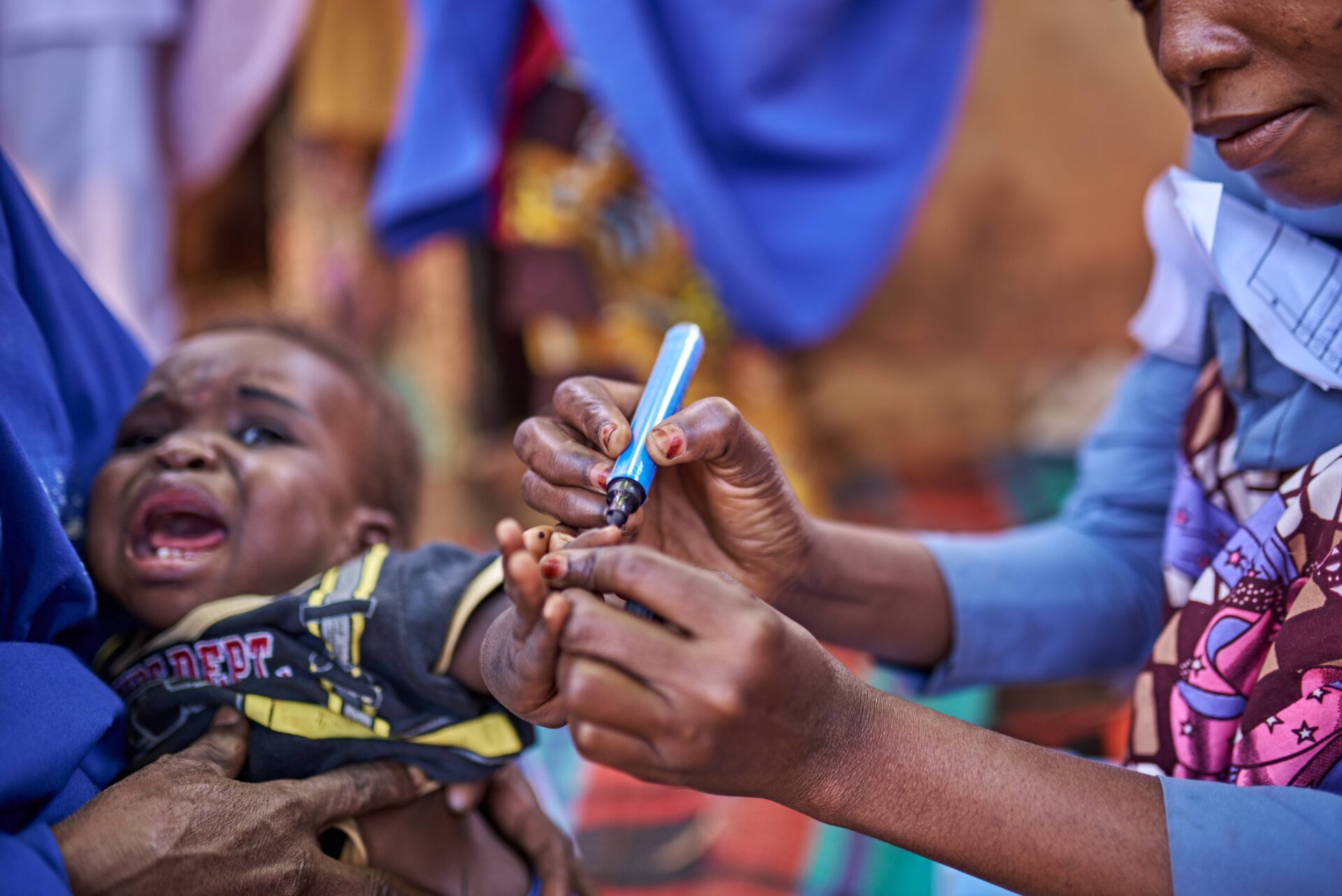
Despite the relative improvement in Measles vaccination coverage across the world, coverage still falls well short of the 95% threshold required in every community to prevent outbreaks. This is because more than 30 million children remain insufficiently protected, contributing to a surge in major measles outbreaks. As revealed by the World Health Organization (WHO), in 2024, the number of countries facing large or disruptive outbreaks climbed to 60, almost double the 33 reported in 2022.
For instance, in northern Nigeria, where settlements are scattered across vast, often insecure distances, a missed turn isn’t just an operational delay; it’s a child left unprotected. Yet the mission remains unwavering: every child must be protected, no matter where they live. Traditional paper-based tracking systems struggle here, creating coverage black holes and accountability gaps that viruses exploit.
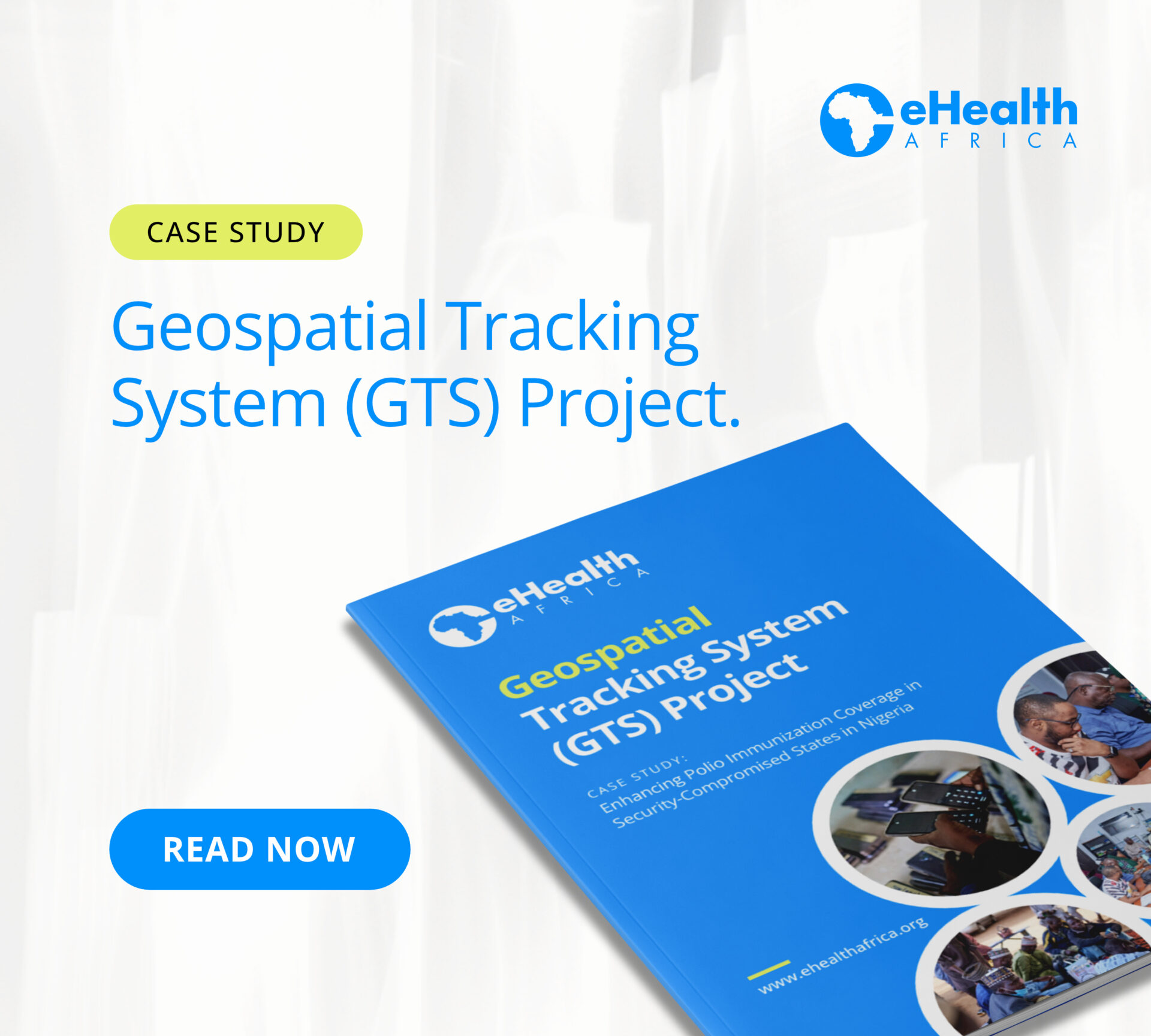
During the October 2025 integrated MR campaign across ten northern states ( Borno, Yobe, Kano, Kaduna, Katsina, Kebbi, Niger, Sokoto, Jigawa and Zamfara), eHealth Africa, through the Gates Foundation-funded Project, titled Geospatial Tracking System (GTS), deployed geo-spatial tracking devices to track settlements and the vaccination teams. These strategic actions shifted teams from reporting what they had done to guiding what to do next. By transforming raw location data into clear insights, GTS strengthened accountability, closed coverage gaps, and enabled field teams to make decisions that mattered in real time.
Making Every Settlement Count
Across ten states, 141,413 settlements were planned for the campaign. With GTS providing real-time monitoring support, supervisors and decision-makers had a clear, unambiguous visual of the entire campaign’s footprint, enabling proactive resource allocation instead of reactive guesses.
By the end of the campaign:
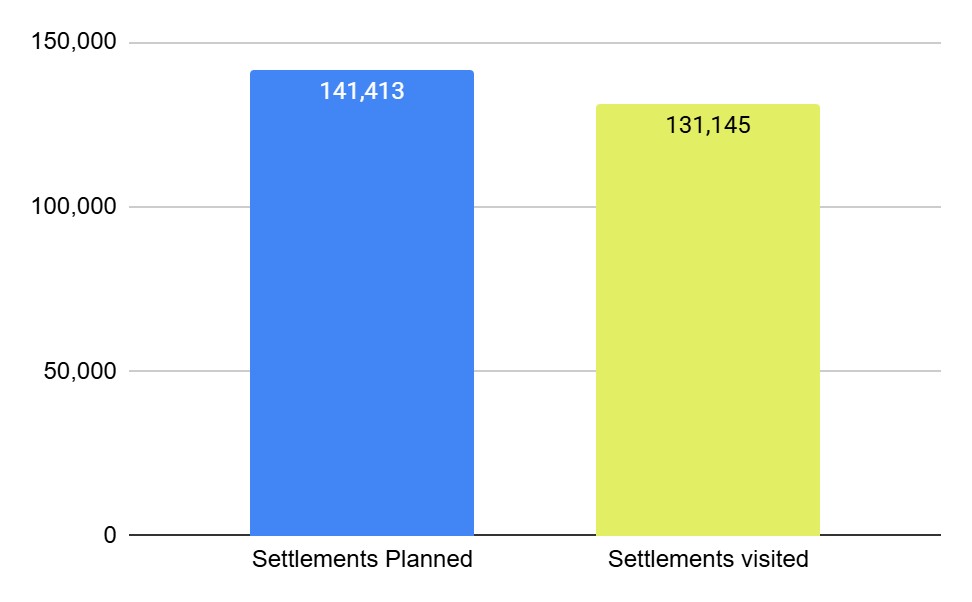
- 131,145 settlements were reached.
- Overall coverage was 93%.
According to the World Health Organization, preliminary national data from Streams 1 and 2 of Phase 1, as of 30 October 2025, indicate that more than 58.9 million children have been vaccinated against measles and rubella. Phase 1 covered a total of 20 high-risk northern states and Oyo State in the Southwest. The ten States supported by eHA during the MR campaign contributed to vaccinating over 58.9 million children in Nigeria’s Phase 1 rollout.
This was not just an operational win, it was an 8% increase from the 86% coverage achieved during IBRA 2 in September. Each percentage point translates into thousands of additional children receiving the measles-rubella vaccine, reinforcing the critical role of geospatial tracking in improving campaign outcomes.
Turning Barriers Into Breakthroughs
The most striking improvements came from Borno and Yobe, two states that have historically faced significant access and security challenges.
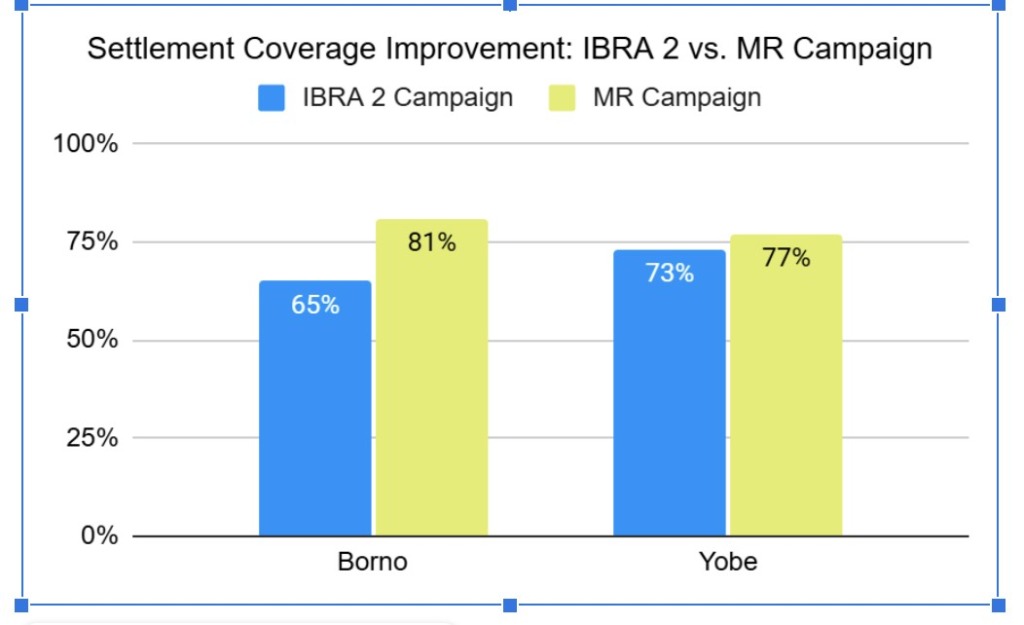
- Borno state coverage improved from 56% during (IBRA 2) → 81% (MR Campaign)
- Yobe state coverage improved from 73% during (IBRA 2) → 76.5% (MR Campaign)
Improved visibility and daily feedback empowered teams to address gaps earlier, reach more settlements, and protect more children.
The October MR campaign did more than raise coverage numbers; it demonstrated how technology can strengthen public health delivery systems. GTS was instrumental in:
- Improving field team accountability
- Guiding deployment decisions based on real-time data
- Reducing missed settlements through early gap detection
- Enhancing transparency for supervisors and partners
The MR campaign showed what is possible when data meets action. With improved geocoverage, stronger team performance, and clearer visibility across states, the campaign marked an important step forward in Nigeria’s immunization efforts. But the work continues. Each missed settlement is a reminder of the children still waiting. When you can see the gap, you can close it.